


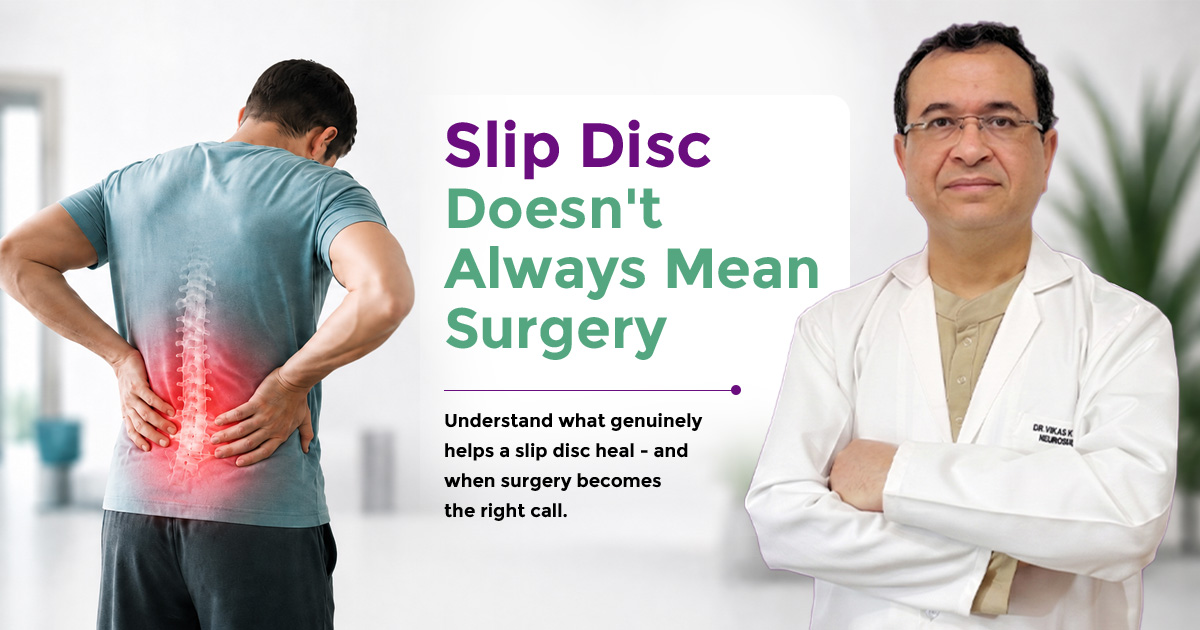
Can a Slip Disc Heal Without Surgery? What Patients Should Know
If you’ve just been told you have a slip disc, chances are the first question on your mind isn’t “what’s next” – it’s “do I really need surgery?” It’s a fair question, and one that comes up constantly in clinics across Gurgaon, from professionals sitting long hours in Cyber City to homemakers managing daily strain on Sohna Road.
The honest answer: many slip discs do heal without surgery. But not all of them – and knowing the difference matters more than any generic reassurance you’ll find online. This guide breaks down exactly when a slip disc can heal on its own, what actually helps it along, and the specific signs that mean surgery isn’t optional anymore.
What Is a Slip Disc?
A slip disc – medically called a herniated or prolapsed disc – happens when the soft, gel-like center of a spinal disc (nucleus pulposus) pushes through a tear in its tougher outer layer (annulus fibrosus). This bulge can press on nearby nerves, causing pain, numbness, or weakness that often radiates down the leg or arm depending on which part of the spine is affected.
It’s not a disc actually “slipping” out of place – it’s a structural tear and bulge. The name has stuck around because it describes how it feels.
Anatomy Explained: Why Discs Herniate
Your spine is made of vertebrae stacked with cushioning discs between them. Each disc acts as a shock absorber, distributing pressure as you sit, bend, and move. Over time, or after sudden strain, the outer ring of a disc can weaken or tear, allowing the inner material to push outward. When that bulge reaches a nerve root or the spinal canal, it triggers the classic symptoms of a slip disc – pain, tingling, or weakness along the path of that nerve.
Can a Slip Disc Heal Without Surgery? The Short Answer
Yes – in a significant number of cases, especially with lumbar (lower back) disc herniations, the body can partially or fully reabsorb the herniated portion of the disc over weeks to months. This is a recognized phenomenon called spontaneous disc resorption. Combined with physiotherapy, activity modification, and pain management, many patients see meaningful improvement without ever needing an operating table.
That said, “can heal” isn’t the same as “will heal for everyone.” Whether non-surgical treatment works depends on the size and location of the herniation, how severe the nerve compression is, and how your body responds over the following weeks.
Causes of Slip Disc
- Age-related disc degeneration (reduced water content, less flexibility)
- Repetitive strain from poor lifting technique
- Prolonged sitting with poor posture
- Sudden trauma or heavy lifting
- Obesity, which increases spinal load
- Genetic predisposition to weaker disc structure
Risk Factors
| Factor | Why It Matters |
|---|---|
| Age (30–50) | Discs naturally lose hydration and elasticity |
| Sedentary desk jobs | Prolonged sitting increases disc pressure |
| Smoking | Reduces blood supply and disc healing capacity |
| Obesity | Adds mechanical stress on lumbar discs |
| Poor posture | Uneven load distribution on the spine |
| Heavy manual labor | Repetitive strain on spinal structures |
| Diabetes | Can affect nerve healing and inflammation response |
Symptoms
Early symptoms:
- Localized back or neck pain
- Mild tingling or discomfort radiating to limbs
- Stiffness after sitting or standing for long periods
Advanced symptoms:
- Persistent pain radiating down the leg (sciatica) or arm
- Numbness or a burning sensation along the nerve path
- Noticeable muscle weakness
Emergency red flags – seek immediate care:
- Loss of bladder or bowel control
- Numbness in the groin or inner thighs (saddle anesthesia)
- Rapidly progressing leg weakness
- Severe pain following trauma
How Is a Slip Disc Diagnosed?
| Test | Why It’s Done |
|---|---|
| Neurological Examination | Assesses reflexes, strength, and sensory changes |
| MRI | Confirms disc herniation size, location, and nerve involvement |
| CT Scan | Useful for bone-related detail, particularly post-trauma |
| X-ray | Rules out fractures and structural misalignment |
| Nerve Conduction Study (NCV) | Evaluates nerve signal transmission |
| EMG | Checks muscle response to nerve stimulation |
Treatment Options
Medicines and Pain Management
Anti-inflammatory medication helps control pain and swelling around the affected nerve during the initial healing window, typically the first few weeks.
Physiotherapy
Structured physiotherapy – including core strengthening and McKenzie-style extension exercises – is often the single most effective non-surgical intervention. It reduces pressure on the disc and improves supporting muscle strength.
Lifestyle Changes
Weight management, posture correction, and avoiding prolonged sitting significantly reduce ongoing disc stress and support natural healing.
Epidural and Nerve Block Injections
For persistent nerve pain not responding to medication alone, image-guided injections reduce localized inflammation and can provide a window of relief for physiotherapy to work.
Minimally Invasive Spine Surgery
Considered when conservative treatment doesn’t relieve symptoms after several weeks, or when nerve compression is significant. Smaller incisions typically mean faster recovery than open surgery.
Endoscopic Spine Surgery
A highly targeted option for select disc herniations, using a small camera and instruments to remove the herniated portion with minimal disruption to surrounding tissue.
When Does a Slip Disc Actually Need Surgery?
Surgery becomes necessary – not optional – when:
- There is progressive muscle weakness that isn’t improving
- Bladder or bowel control is affected (cauda equina syndrome – emergency)
- Pain remains severe and disabling after 6–8 weeks of consistent conservative treatment
- Imaging shows significant nerve or spinal cord compression
Outside of these situations, most surgeons – including at SAB Clinic – will recommend a structured non-surgical trial first.
Surgery Explained
When surgery is required, minimally invasive or endoscopic techniques are generally preferred where the anatomy allows. These approaches involve smaller incisions, targeted removal of the herniated disc material, and typically a shorter hospital stay compared to open surgery. Recovery expectations and possible complications – including a small risk of recurrence, infection, or incomplete symptom relief – are always discussed individually based on the specific case.
Comparison Table: Non-Surgical vs Surgical Treatment
| Treatment | Best For | Recovery | Advantages | Limitations |
|---|---|---|---|---|
| Physiotherapy | Mild-moderate herniation | 6–12 weeks | Non-invasive, builds long-term strength | Slower results, needs consistency |
| Epidural Injection | Nerve inflammation, moderate pain | Days | Fast symptom relief | Temporary, doesn’t fix herniation |
| Minimally Invasive Surgery | Persistent nerve compression | 2–4 weeks | Smaller incision, faster recovery | Not needed for all cases |
| Endoscopic Discectomy | Localized disc herniation | 1–3 weeks | Minimal tissue disruption | Requires specific anatomy and expertise |
| Open Surgery | Large or complex herniation | 6–12 weeks | Handles complex cases | Longer recovery, more invasive |
Cost of Treatment in Gurgaon
Non-surgical treatment (physiotherapy, medication, occasional injections) is generally the lower-cost starting point and is typically pursued for 6–8 weeks before surgery is considered. Minimally invasive and endoscopic spine surgery costs vary based on the complexity of the case, hospital stay, and specific technique used. Actual costs depend on individual diagnosis and are best discussed during consultation.
Recovery Timeline
With non-surgical treatment:
- Week 1: Pain management begins, activity modification starts
- Month 1: Noticeable reduction in nerve-related symptoms with consistent physiotherapy
- Month 3: Significant improvement expected for most responsive cases
- Month 6: Many patients reach near-complete symptom resolution
If surgery is required:
- Day 1: Early mobilization, pain monitoring
- Week 1: Gradual activity increase, wound care
- Month 1: Return to light daily activities
- Month 3: Most patients resume normal routines
- Month 6: Full recovery expected for minimally invasive procedures
Possible Complications If Left Untreated
An untreated slip disc with ongoing nerve compression can lead to chronic pain, permanent nerve damage, progressive muscle weakness, and in severe untreated cases, lasting loss of function in the affected limb.
Prevention Tips
- Practice proper lifting technique – bend at the knees, not the waist
- Maintain a healthy weight to reduce spinal load
- Strengthen your core through regular, targeted exercise
- Take movement breaks every 30–45 minutes during desk work
- Correct slouched sitting posture
- Avoid smoking, which impairs disc healing capacity
- Don’t ignore early back pain – address it before it progresses
When Should You Consult a Neurosurgeon?
- Pain persists beyond 6–8 weeks despite physiotherapy and medication
- Numbness or weakness is spreading or worsening
- You experience loss of bladder or bowel control
- Pain follows a trauma or fall
- Daily activities are significantly limited by pain
Why Choose Dr. Vikas Kathuria?
Dr. Vikas Kathuria takes a structured, evidence-based approach to slip disc cases – starting with a thorough diagnostic workup to understand exactly where and how severe the herniation is, rather than defaulting to surgery. Where conservative treatment is appropriate, it’s given a genuine, monitored trial. When surgery does become necessary, minimally invasive and endoscopic techniques are prioritized wherever the anatomy allows, with follow-up care built into the treatment plan to track recovery.
Frequently Asked Questions
1. Can a slip disc heal completely without surgery?
Yes, in many cases, particularly with smaller lumbar herniations. The body can partially or fully reabsorb the herniated disc material over weeks to months, especially with consistent physiotherapy and activity modification. However, not every case responds this way, which is why monitoring progress matters.
2. How long does it take for a slip disc to heal without surgery?
Most patients see meaningful improvement within 6 to 12 weeks of consistent conservative treatment. Full recovery can take up to 6 months in some cases, depending on the size of the herniation and how well the body responds to treatment.
3. What exercises help a slip disc heal?
Core-strengthening exercises and McKenzie-style extension movements are commonly recommended, as they help stabilize the spine and reduce pressure on the affected disc. Exercises should be guided by a physiotherapist, since incorrect movement can worsen symptoms.
4. Is walking good for a slip disc?
Gentle walking is generally encouraged, as it promotes blood flow and prevents stiffness without placing excessive strain on the spine. High-impact activities or heavy lifting should be avoided until symptoms improve.
5. When does a slip disc become an emergency?
It becomes an emergency when there’s loss of bladder or bowel control, numbness in the groin or inner thighs, or rapidly worsening leg weakness. These symptoms suggest cauda equina syndrome and require immediate medical attention.
6. Can a slip disc come back after healing?
Yes, recurrence is possible, particularly if underlying risk factors like poor posture, excess weight, or improper lifting technique aren’t addressed. Long-term core strengthening and posture correction significantly reduce this risk.
7. Do all slip discs eventually need surgery?
No. A large proportion of slip disc cases respond well to conservative treatment and never require surgery. Surgery is generally reserved for cases with significant nerve compression, progressive weakness, or symptoms that don’t improve after several weeks of proper treatment.
8. What’s the difference between a slip disc and sciatica?
A slip disc is the structural issue – a herniated disc – while sciatica is a symptom that can result from it, caused by compression of the sciatic nerve. Not all slip discs cause sciatica, and sciatica can occasionally have other causes.
9. Is bed rest good for a slip disc?
Short periods of rest can help during acute flare-ups, but prolonged bed rest is generally discouraged. Gentle movement and physiotherapy tend to support recovery better than extended inactivity.
10. Can physiotherapy alone treat a slip disc?
For many mild to moderate cases, physiotherapy combined with lifestyle changes is sufficient. It strengthens supporting muscles and reduces pressure on the disc, though results depend on consistency and the specific nature of the herniation.
11. How is the size of a slip disc herniation determined?
An MRI is the primary tool used to assess the exact size, location, and degree of nerve involvement of a herniated disc. This imaging guides whether conservative treatment or surgical intervention is more appropriate.
12. What happens if a slip disc is left completely untreated?
Ongoing nerve compression from an untreated slip disc can lead to chronic pain, progressive muscle weakness, and in severe cases, lasting nerve damage. Early evaluation helps prevent the condition from advancing to that stage.
Final Thoughts: Healing Is Possible – But It Needs the Right Approach
A slip disc diagnosis doesn’t automatically mean surgery. For many patients, the body’s own healing process, supported by structured physiotherapy and lifestyle changes, is enough to resolve symptoms over time. But that path only works when it’s monitored properly – and knowing when to escalate to surgical treatment is just as important as trying conservative care first.
If you’re dealing with slip disc symptoms and want a clear picture of what’s actually happening in your spine, book a consultation with Dr. Vikas Kathuria in Gurgaon for a proper diagnosis and a treatment plan built around your specific case.