


Head Injury Treatment in Gurgaon & Delhi NCR
A head injury can change a life in seconds. Whether it is a mild concussion after a fall or a severe traumatic brain injury (TBI) after a road accident, timely diagnosis and expert neurosurgical care decide the outcome. Dr. Vikas Kathuria at Skin Aura Brain & Neuro Centre, DLF Phase IV, Gurugram offers complete head injury treatment, from emergency stabilization to surgery and long-term rehabilitation.
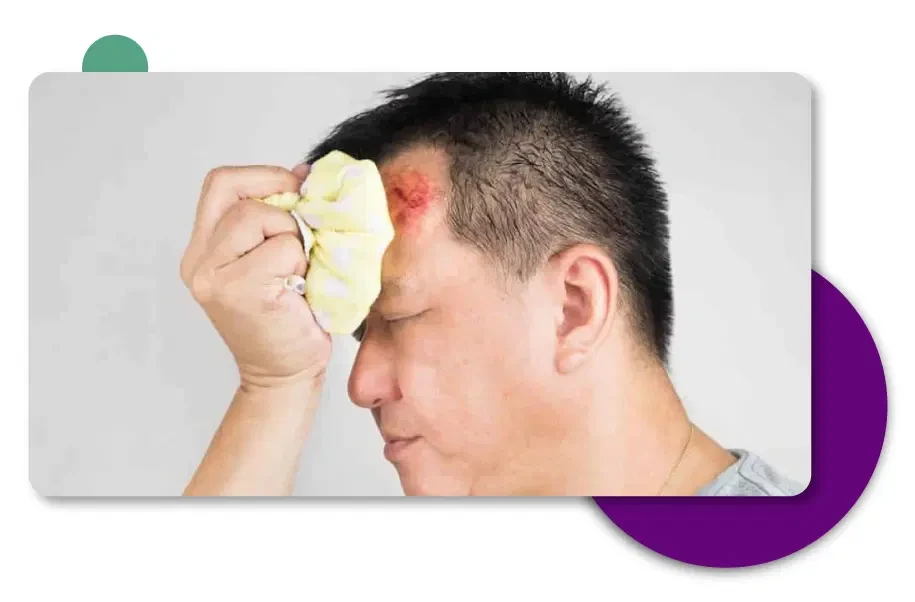
Expert Head Injury Care When Every Minute Matters
When the head is injured, time, expertise and precision are critical. The effects may not be visible right away, yet trauma can disturb brain function in ways that become permanent or even life-threatening if left untreated. A head injury can affect a person physically, emotionally and cognitively, which is why every case, however minor it looks, deserves a careful evaluation.
If you or a family member has suffered a blow to the head, consulting a qualified neurosurgeon is the safest step. In Gurgaon, Dr. Vikas Kathuria is widely recognised for handling every level of head trauma, from mild concussions to complex, life-threatening brain injuries. Patients from Gurgaon, Delhi, Faridabad, Noida and across Delhi NCR visit the centre for a clear diagnosis and a transparent treatment plan.
Understanding Head Injuries
Head injuries are rarely straightforward. A small bump can lead to internal bleeding or swelling, while a patient who looks seriously hurt may recover well with prompt intervention. That is why a thorough diagnostic and treatment strategy is essential. A head injury can involve one or more of these structures:
Scalp
Cuts, bleeding and swelling. The scalp has a rich blood supply, so even small wounds can bleed heavily.
Skull
The bone may crack or break on impact, which can press on or injure the brain beneath it.
Brain Tissue
The brain can be bruised (contusion), bleed (haemorrhage) or swell (oedema), disturbing normal function.
The brain floats in cerebrospinal fluid and is protected by the skull. A strong blow or sudden jolt can overwhelm these natural buffers and cause temporary or permanent dysfunction. The treatment plan depends on which area is affected and how severe the damage is.
Mild vs. Severe Head Injury
Mild Head Injury (Concussion): More Serious Than It Looks
Many people underestimate a concussion because symptoms may be subtle or delayed. Common signs include:
- Headache and nausea
- Sensitivity to noise or light
- Mild confusion or dizziness
- Fatigue and difficulty concentrating
Symptoms often settle within days or weeks, but ignoring them is risky. Some patients develop post-concussion syndrome, with memory problems, irritability and sleep disturbance lasting weeks or months. Dr. Kathuria stresses close observation and follow-up so that recovery continues without hidden complications.
Severe Head Injury: Time-Critical and Potentially Fatal
Severe injuries are often accompanied by loss of consciousness, seizures, bleeding or coma and need immediate hospitalisation, advanced imaging and frequently surgery. Common causes include:
- High-impact road traffic accidents
- Falls from height
- Assaults or blunt trauma
- Industrial or workplace accidents
- Sports injuries and explosive blasts
In these cases the brain may be under pressure from blood clots, swelling or haemorrhage. The team acts quickly to stabilise the patient, monitor intracranial pressure and decide whether surgery is needed to decompress the brain or remove a haematoma.
Go to the Emergency Room Immediately If You See:
- Loss of consciousness, even for a short time
- Repeated vomiting or a worsening headache
- Seizures or fits
- Blood or clear fluid from the nose or ears
- Slurred speech, confusion, or not recognising people
- Weakness in an arm or leg, or unequal pupils
- Unusual drowsiness or difficulty waking up
Why Delayed Symptoms Are Dangerous
Consider a common situation: a young man has a minor motorcycle accident and walks away with a small bruise on the forehead. He goes home feeling fine, but a few hours later he becomes nauseous, confused and drowsy. A CT scan at the hospital reveals a slowly forming subdural haematoma, a collection of blood pressing on the brain.
Such cases are not rare. Symptoms can appear hours or even days after the injury, and only an experienced specialist can judge when it is safe to observe and when immediate intervention is required. This is where a neurosurgeon’s diagnostic judgement makes a real difference.
How Head Injury Is Diagnosed
Diagnosis begins with a careful history and neurological examination, including the Glasgow Coma Scale (GCS) to assess consciousness, eye response, speech and movement. Imaging then shows what cannot be seen from outside:
- CT scan: the first-line test to detect skull fractures, bleeding and swelling quickly.
- MRI: gives finer detail of brain tissue and subtle injuries such as diffuse axonal injury.
- Neurovascular imaging: checks for blood vessel damage or aneurysms when needed.
Head Injury Treatment at Skin Aura Brain & Neuro Centre
Treatment is not always about surgery. It is the right combination of medical management, surgical care when required, and long-term rehabilitation.
1. Emergency Stabilisation
The first priority is a stable airway, breathing and circulation. Vital signs are monitored, oxygen is given when needed, and the patient is kept under close neurological observation.
2. Imaging and Diagnostics
CT and MRI define the type and extent of injury and guide the decision between observation, medicines and surgery.
3. Medication Management
For mild to moderate injuries, treatment may include pain relievers (avoiding NSAIDs that can increase bleeding), anti-nausea medicines, anti-seizure drugs to prevent post-traumatic seizures, and diuretics to reduce pressure on the brain. In severe cases, sedation may be used to protect the brain from further stress.
4. Surgical Intervention
Surgery becomes necessary when:
- A blood clot or haematoma must be removed
- The skull is fractured or depressed
- Swelling threatens brain function and decompression is required
- There is penetrating trauma needing repair or reconstruction
Minimally invasive techniques are used wherever possible to reduce recovery time and post-operative complications.
5. Multidisciplinary Rehabilitation
Recovery does not end with surgery. Depending on the injury, patients may need cognitive therapy for memory and concentration, speech therapy, occupational therapy to relearn daily tasks, physiotherapy for strength and balance, and emotional counselling for anxiety, depression or PTSD.
Recovery and Aftercare
Recovery differs for every patient. Mild injuries usually improve within weeks with rest, gradual return to routine and follow-up visits. Moderate to severe injuries may need months of rehabilitation. Avoid alcohol, contact sports and driving until your doctor confirms it is safe, and always wear a helmet on two-wheelers to prevent a repeat injury. Families are encouraged to report any new headache, vomiting, mood change or seizure promptly.
Why Choose Dr. Vikas Kathuria for Head Injury Treatment in Gurgaon?
- Neurotrauma expertise: experience in managing simple as well as complex and life-threatening head injuries.
- Advanced facilities: ICU support and neuro-monitoring for critical patients.
- Transparent communication: clear explanation of diagnosis, options and prognosis to families.
- Complete care: emergency management, surgery and rehabilitation under one roof.
- Convenient location: DLF Phase IV, Gurugram, near Huda City Centre Metro, easily reachable from Gurgaon, South Delhi, Faridabad and Noida.
Most importantly, every patient is treated as a person, not just a case. The emotional and psychological impact of head injury receives as much attention as the physical trauma.
Frequently Asked Questions (FAQs)

1. When should I see a neurosurgeon after a head injury?
See a neurosurgeon immediately if there is loss of consciousness, vomiting, seizures, worsening headache, confusion or bleeding from the nose or ears. Even without these signs, get evaluated if you feel unwell after a blow to the head.
2. Can a mild head injury become serious later?
Yes. Slow bleeding such as a subdural haematoma can cause symptoms hours or days later. That is why observation and follow-up after even a minor injury are important.
3. Which tests are needed for a head injury?
A neurological examination and a CT scan are usually the first tests. An MRI or neurovascular imaging may be advised for detailed assessment.
4. Does every head injury need surgery?
No. Most mild injuries are managed with medicines, rest and monitoring. Surgery is needed only for blood clots, depressed skull fractures, dangerous swelling or penetrating injuries.
5. How long does recovery from a concussion take?
Most people improve within days to a few weeks. Some develop post-concussion syndrome, where headache, memory trouble and sleep problems last longer and need medical follow-up.
6. Is rehabilitation necessary after a head injury?
Often yes, especially after moderate or severe injuries. Cognitive, speech, occupational and physical therapy help patients regain independence and quality of life.
7. Where can I find head injury treatment near me in Gurgaon?
Dr. Vikas Kathuria consults at Skin Aura Brain & Neuro Centre, H.N. 7311, Behind DLF Super Mart 2, DLF Phase IV, Gurugram, near Huda City Centre Metro Station. Call +91-9215151260 to book an appointment.
Book a Consultation
If you suspect a head injury, do not wait. Whether it is an emergency or a second opinion, contact Dr. Vikas Kathuria’s team.
Address: H.N. 7311, Ground Floor & LGF, Behind DLF Super Mart 2, DLF Phase IV, Near Huda City Centre Metro Station, Gurugram, Haryana 122009
Phone: +91-9215151260 | Email: care@sabclinic.com
Mon-Sat: 10:30 AM-12:30 PM, 6:00 PM-7:30 PM | Sunday: 10:00 AM-2:00 PM
Visit Dr. Vikas Kathuria or Skin Aura Brain & Neuro Centre for more information.
Disclaimer: This page is for general awareness and does not replace professional medical advice. In an emergency, go to the nearest hospital immediately.