


Dr. Vikas Kathuria
Senior Consultant Neurosurgeon with 25 years+ extensive experience in treating
complex brain and spine disorders. Dr. Vikas Kathuria offers trusted spine tumor treatment in Gurgaon, specializing in advanced spine
tumor surgery, minimally invasive spine procedures, and personalized treatment plans,
helping patients achieve safer surgery, faster recovery, and better quality of life.
A spine tumor is an abnormal growth of cells in or around the spinal cord and the bones of the vertebral column. Are you looking for reliable spine tumor treatment in Gurgaon or elsewhere in Delhi NCR? Then early diagnosis matters a lot. It can make a real difference to your long-term recovery.
Dr. Vikas Kathuria brings over two decades of clinical experience to every case. He offers complete evaluation, non-surgical management, and minimally invasive surgery for spine tumors at his Gurugram clinic. Patients from Delhi, Noida, Faridabad, Dwarka, and the wider NCR region can reach the clinic easily.
What Is a Spine Tumor?
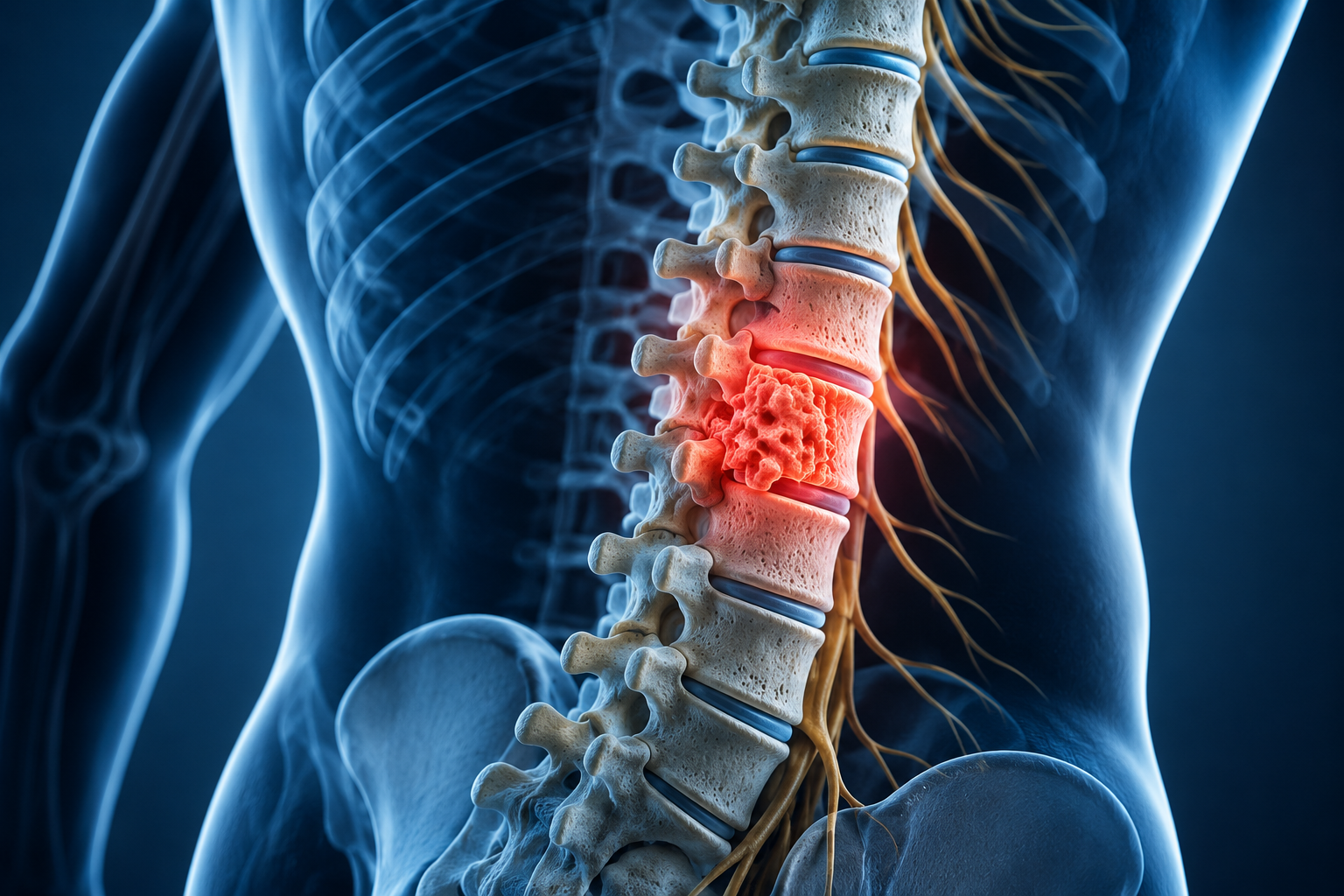
A spine tumor is any abnormal growth of cells in or around the spinal cord and vertebral column. Doctors classify these tumors as either benign (non-cancerous and slow-growing) or malignant (cancerous and faster-growing). Malignant tumors can also spread to other areas.
Doctors also group spine tumors by where they originate:
- Primary spine tumors start in the spine itself. Meningiomas, neurofibromas, and ependymomas fall into this group. These tumors remain fairly rare.
- Metastatic (secondary) spine tumors spread from cancer elsewhere in the body — for example, the lungs, breast, or prostate. In adults, these tumors occur far more often than primary spine tumors.
Classification by Location
Doctors also classify spine tumors by their position relative to the spinal cord and its coverings:
- Intramedullary tumors grow within the spinal cord tissue itself.
- Intradural-extramedullary tumors grow inside the dura (the spinal cord’s covering) but stay outside the cord. In adults, meningiomas, neurofibromas, and ependymomas commonly appear here.
- Extradural tumors grow outside the dura, often in the vertebral bone. Most metastatic spine tumors occur at this site.
Doctors also name tumors by spinal region: cervical (neck), thoracic (mid-back), lumbar (lower back), or sacral (base of spine). The name simply reflects where the tumor sits along the vertebral column.
Signs and Symptoms of a Spine Tumor
Back pain is usually the first symptom. Unlike typical mechanical back pain, this pain feels dull and persistent. It also tends to worsen at night or when you lie down.
You may also notice these symptoms, depending on the tumor’s location:
- Pain that spreads into the arms, legs, chest, or abdomen
- Numbness or tingling in the arms or legs
- Muscle weakness that gets worse over time
- Difficulty walking or a loss of balance
- Loss of bladder or bowel control — this needs urgent medical attention
How Is a Spine Tumor Diagnosed?
Diagnosis usually follows these steps:
- Clinical evaluation — the doctor reviews your symptoms, performs a neurological exam, and checks your medical history
- MRI scan — this remains the primary tool for viewing the tumor’s size, location, and relationship to the spinal cord
- CT scan — this helps assess how much the bone has been affected
- Biopsy — in some cases, the doctor may need this to confirm the tumor type before planning treatment
Treatment Options for Spine Tumors
Treatment depends on several factors: the tumor’s type, its location, its size, and whether it is benign or malignant.
Non-Surgical Treatment

- Radiotherapy uses high-energy radiation to destroy or shrink tumor cells. Doctors commonly use this for metastatic spine tumors.
- Chemotherapy works through oral medication or injection, depending on the tumor type.
- Watchful monitoring suits small, symptom-free tumors found by accident. In these cases, doctors track the tumor’s growth through regular imaging before choosing active treatment.
Surgical Treatment
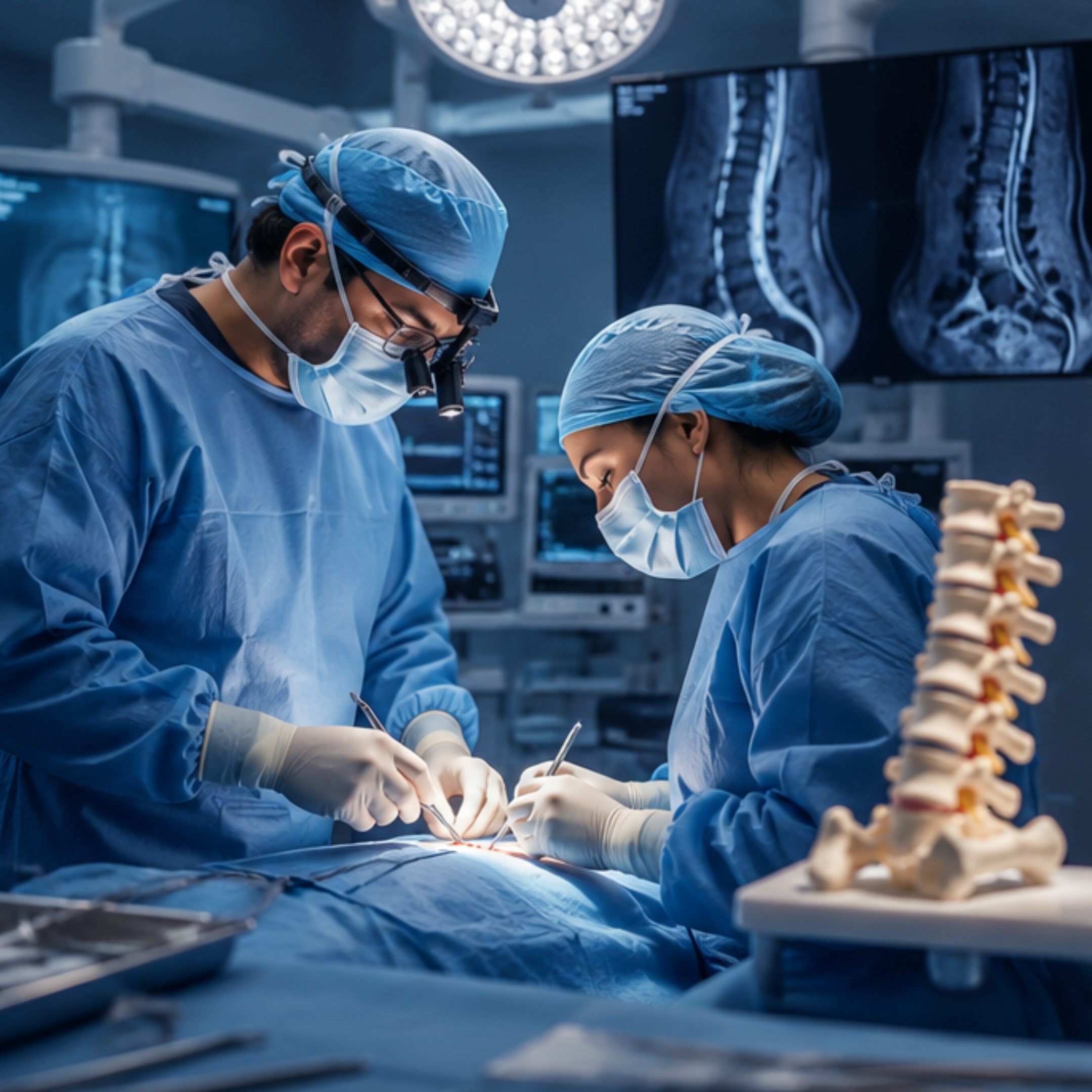
- Tumor excision surgery removes the tumor. Surgeons often use minimally invasive techniques here, along with smaller incisions, advanced navigation systems, and intraoperative monitoring.
- Spine stabilization surgery becomes necessary when tumor invasion weakens the vertebral bone and destabilizes the spine. This surgery helps prevent fractures and protects the spinal cord.
Is Spine Tumor Surgery Safe?
Spinal surgery has advanced a lot over the past decade. Better imaging and minimally invasive techniques now let surgeons access the spinal cord through smaller incisions. As a result, patients experience less blood loss and recover faster than with traditional open surgery.
Like any major surgery, some risk remains. However, an experienced specialist who follows modern surgical protocols and monitors recovery closely can significantly lower that risk.
Why Trust Dr. Vikas Kathuria for Spine Tumor Treatment in Gurgaon?
Choosing the right neurosurgeon matters most when it comes to spine tumor treatment in Gurgaon. Dr. Vikas Kathuria combines decades of clinical experience with modern imaging and minimally invasive techniques, giving patients from across Delhi NCR a safer path to recovery — backed by clear communication and a treatment plan tailored to each case.
About Dr. Vikas Kathuria
Dr. Vikas Kathuria is a senior neurosurgeon based in Gurugram. He brings over two decades of experience in brain and spine care to his practice. He leads Brain & Spine Neuro Centre and also serves as a Senior Consultant Neurosurgeon at Max Hospital, Gurgaon. His focus areas include minimally invasive spine surgery, brain tumor surgery, and complex neurological procedures. Above all, he prioritizes patient safety, clear communication, and personalized treatment planning.
Frequently Asked Questions
1. What are the symptoms of a spine tumor?
Common symptoms include persistent back pain that worsens at night, weakness, numbness or tingling in the arms or legs, and difficulty walking. In advanced cases, you may also lose bladder or bowel control.
2. Is spine tumor treatment safe?
Yes, it is. Thanks to modern imaging and minimally invasive surgical techniques, experienced teams can now treat spine tumors effectively and with much lower risk than before.
3. How is a spine tumor diagnosed?
First, the doctor performs a clinical neurological examination. Then, an MRI scan follows. In some cases, a CT scan or biopsy helps confirm the tumor type before treatment begins.
4. Can a benign spine tumor become cancerous?
This happens rarely. Even so, doctors monitor benign tumors through regular imaging and evaluate any changes in growth right away.
5. How long does recovery take after spine tumor surgery?
Recovery time varies from patient to patient. Generally, minimally invasive procedures need a few weeks, while more complex surgeries may take a couple of months.
6. Do you treat patients from Delhi NCR, not just Gurgaon?
Yes, absolutely. Dr. Vikas Kathuria’s Gurugram clinic stays easily accessible to patients from Delhi, Noida, Faridabad, and the rest of the NCR region. Consultation and treatment support remain available for everyone.
Are you or a family member experiencing symptoms of a spine tumor? Early diagnosis leads to better outcomes. So, consult Dr. Vikas Kathuria, a trusted neurosurgeon for spine tumor treatment in Gurgaon and Delhi NCR, for a thorough evaluation and personalized treatment plan.