


By Dr. Vikas Kathuria | Senior Consultant Neurosurgeon | Updated: 11 July 2026 | 8 min read
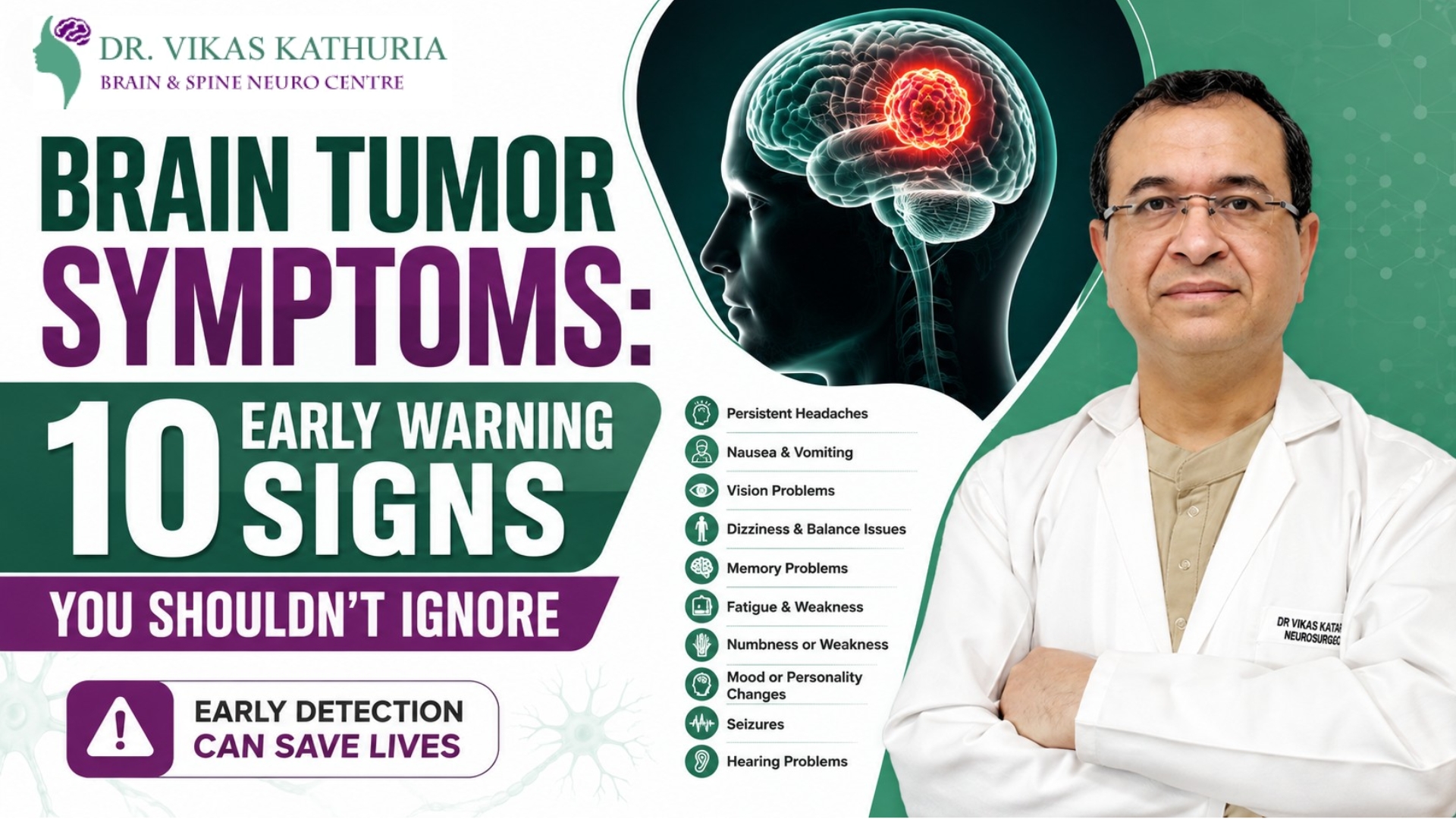
Brain Tumor Symptoms: 10 Early Warning Signs You Shouldn’t Ignore
Brain tumors often begin with subtle symptoms that people mistake for stress, migraine, or fatigue. While not every headache is caused by a brain tumor, persistent neurological symptoms should never be ignored. Early diagnosis can improve treatment outcomes and help prevent serious complications.
If you live in Gurgaon, Delhi NCR, Faridabad, or nearby areas, understanding the warning signs of a brain tumor can help you seek timely medical care from an experienced neurosurgeon.

MRI scan showing a brain tumor (brain metastasis). MRI is considered the most reliable imaging test for diagnosing brain tumors.
Table of Contents
- What is a Brain Tumor?
- 10 Early Warning Signs
- Causes & Risk Factors
- When Should You See a Neurosurgeon?
- Diagnosis
- Treatment Options
- Why Choose Dr. Vikas Kathuria?
- Frequently Asked Questions
What is a Brain Tumor?
A brain tumor is an abnormal growth of cells inside or around the brain. These tumors may be benign (non-cancerous) or malignant (cancerous). Since the brain is enclosed within the skull, even a small tumor can increase pressure on nearby tissues and interfere with normal brain function.
Brain tumors are broadly divided into two main categories:
- Primary Brain Tumors – Tumors that originate in the brain.
- Secondary (Metastatic) Brain Tumors – Tumors that spread to the brain from cancers in other parts of the body.
The symptoms of a brain tumor depend largely on its location rather than its size. A small tumor in a critical area of the brain may produce severe symptoms, whereas a larger tumor in a less sensitive area may remain unnoticed for a longer period.
Did You Know?
Brain tumors can affect memory, speech, vision, balance, hearing, personality, and movement depending on which part of the brain is involved.
10 Early Warning Signs of a Brain Tumor
Not every headache or episode of dizziness is caused by a brain tumor. However, if symptoms are persistent, worsening, or accompanied by neurological changes, they should never be ignored. Early diagnosis allows treatment to begin before the tumor causes permanent damage to the brain.
Below are the ten most common warning signs that may indicate a brain tumor.
| Symptom | What You Should Watch For |
|---|---|
| 1. Persistent Headache | Headaches that become more severe over time, especially in the morning or after coughing and bending forward. |
| 2. Nausea & Vomiting | Repeated vomiting without stomach infection, particularly in the early morning. |
| 3. Seizures | A first-time seizure in an adult should always be evaluated by a neurologist or neurosurgeon. |
| 4. Vision Problems | Blurred vision, double vision, reduced peripheral vision or sudden vision changes. |
| 5. Balance & Walking Difficulty | Frequent falls, dizziness, poor coordination or difficulty maintaining balance. |
| 6. Weakness or Numbness | Loss of strength or sensation affecting one side of the body. |
| 7. Speech Difficulty | Difficulty speaking clearly, slurred speech or trouble understanding language. |
| 8. Memory Problems | Forgetfulness, confusion, poor concentration and personality changes. |
| 9. Hearing Changes | Gradual hearing loss or ringing in one ear. |
| 10. Personality or Behaviour Changes | Unexpected mood swings, irritability, anxiety or behavioural changes noticed by family members. |
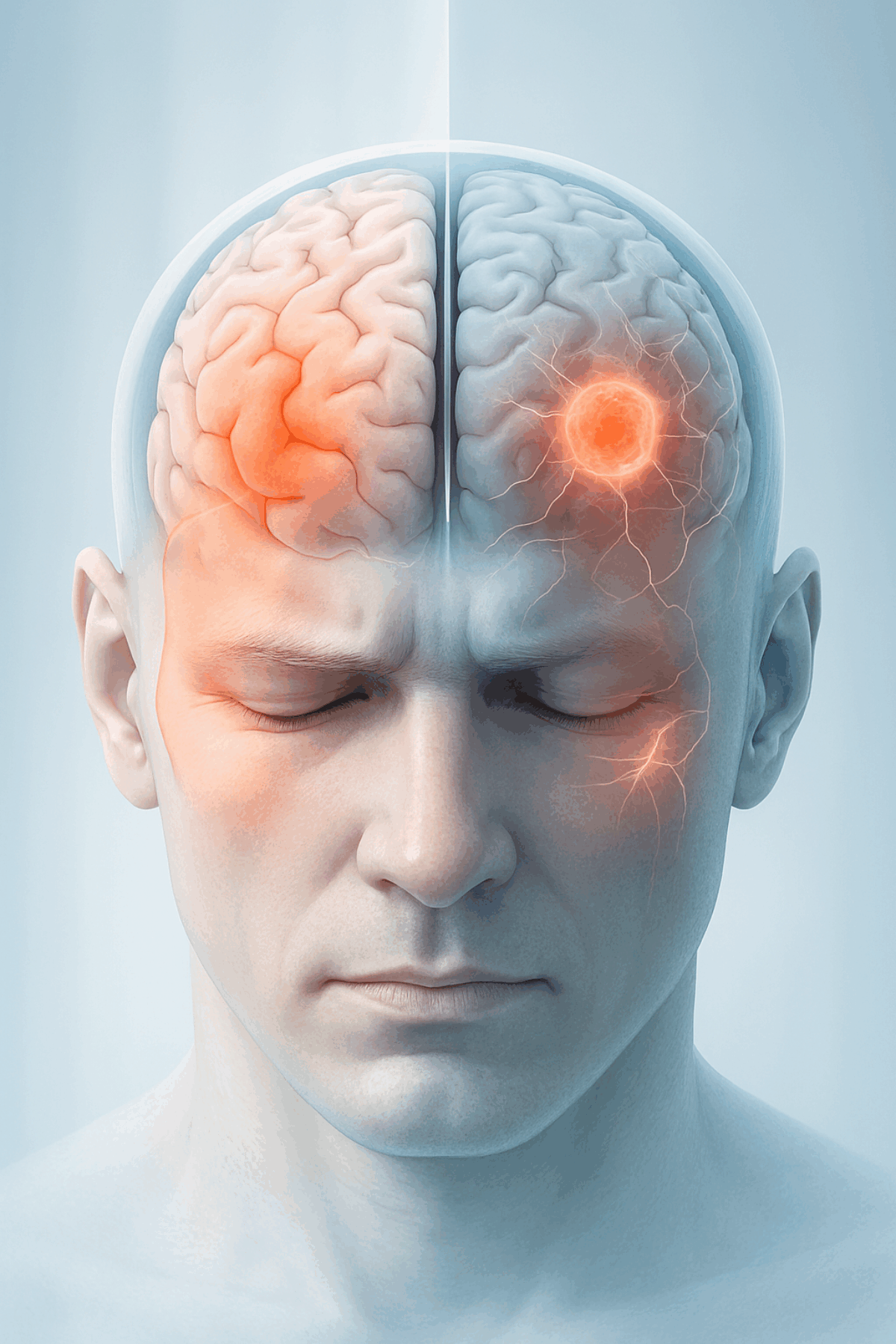
Brain tumor symptoms vary depending on which area of the brain is affected. The infographic above illustrates how different regions of the brain control movement, vision, speech, memory and balance.
Why Do Symptoms Differ From One Patient to Another?
Every part of the brain controls different body functions. A tumor located in the frontal lobe may affect behaviour and decision-making, while a tumor in the occipital lobe often causes vision problems. Tumors affecting the cerebellum commonly lead to poor balance and coordination.
- Frontal Lobe: Personality changes, weakness and difficulty planning tasks.
- Parietal Lobe: Numbness, sensory changes and difficulty recognising objects.
- Temporal Lobe: Memory loss, hearing problems and speech difficulty.
- Occipital Lobe: Blurred vision, double vision or vision loss.
- Cerebellum: Poor balance, dizziness and unsteady walking.
Medical Advice:
If you experience persistent headaches together with seizures, repeated vomiting, weakness, vision changes or difficulty speaking, seek immediate evaluation from a qualified neurosurgeon. Early diagnosis significantly improves treatment outcomes.
Causes and Risk Factors
The exact cause of most brain tumors remains unknown. However, researchers have identified several factors that may increase the risk of developing a brain tumor. Having one or more of these risk factors does not necessarily mean that a person will develop a brain tumor, but they can increase the likelihood in some individuals.
| Risk Factor | How It May Increase Risk |
|---|---|
| Age | Brain tumors can occur at any age, but certain types are more common in older adults while others are seen in children. |
| Previous Radiation Therapy | People who have received radiation treatment to the head have a slightly higher risk of developing brain tumors later in life. |
| Family History | Rare inherited genetic conditions such as Neurofibromatosis or Li-Fraumeni syndrome may increase the risk. |
| Weakened Immune System | Individuals with compromised immunity may develop certain rare tumors more frequently. |
| Cancer in Other Organs | Cancers of the lung, breast, kidney and skin may spread to the brain and form metastatic brain tumors. |
Important:
Most brain tumors develop without a known cause. Early recognition of symptoms and timely MRI evaluation remain the best approach for early diagnosis.
When Should You See a Neurosurgeon?
Many patients ignore symptoms until they become severe. If you experience persistent headaches, repeated vomiting, seizures, weakness on one side of the body, blurred vision, speech problems or sudden personality changes for more than two weeks, you should consult a neurosurgeon immediately.
Patients from Gurgaon, Delhi NCR, Faridabad and nearby cities frequently visit after months of ignoring symptoms. Early medical evaluation allows treatment before the tumor causes significant damage to the brain.
Seek Emergency Medical Attention If You Have:
- First-time seizure
- Sudden weakness of the face, arm or leg
- Difficulty speaking or understanding speech
- Sudden loss of vision
- Severe headache with repeated vomiting
- Loss of consciousness
How Brain Tumors Are Diagnosed
Diagnosing a brain tumor usually begins with a detailed neurological examination followed by advanced imaging tests. The goal is to identify the tumor, determine its location and understand whether it is benign or malignant.
| Diagnostic Test | Purpose |
|---|---|
| Neurological Examination | Checks balance, coordination, muscle strength, sensation, speech and reflexes. |
| MRI Scan | The most accurate imaging technique for identifying brain tumors, their size and exact location. |
| CT Scan | Useful in emergency situations or when MRI cannot be performed. |
| Contrast MRI | Provides detailed information about tumor blood supply and surrounding brain tissue. |
| Biopsy | Confirms the type and grade of the tumor under a microscope before planning treatment. |
Diagnosis Process
- Medical History & Symptom Review
- Neurological Examination
- MRI or CT Scan
- Contrast MRI (if required)
- Biopsy (if needed)
- Final Diagnosis
- Personalized Treatment Plan
Modern MRI technology allows neurosurgeons to detect brain tumors at an early stage, helping patients receive the most appropriate treatment with improved safety and better outcomes.
Brain Tumor Treatment Options
Treatment for a brain tumor depends on several factors, including the tumor type, size, location, growth rate, age of the patient and overall health. Every patient requires an individualized treatment plan prepared by an experienced neurosurgeon.
| Treatment | Recommended For |
|---|---|
| Observation | Small benign tumors that are not causing symptoms and can be safely monitored with regular MRI scans. |
| Microsurgical Brain Surgery | Symptomatic tumors that require complete or partial removal while preserving normal brain function. |
| Endoscopic Brain Surgery | Selected tumors located deep inside the brain or near the skull base. |
| Stereotactic Radiosurgery | Small tumors that can be treated without open surgery using focused radiation. |
| Radiation Therapy | Often recommended after surgery for malignant tumors or when surgery is not possible. |
| Chemotherapy | Used in combination with surgery and radiation for certain malignant brain tumors. |
Treatment Journey
- Consultation with Neurosurgeon
- Neurological Examination
- MRI / CT Scan
- Accurate Diagnosis
- Personalized Treatment Planning
- Brain Tumor Surgery (If Required)
- Radiation / Chemotherapy (If Required)
- Recovery & Regular Follow-up
Why Choose Dr. Vikas Kathuria?
Dr. Vikas Kathuria is a highly experienced Senior Consultant Neurosurgeon with over 26 years of experience in treating complex brain and spine disorders. He has successfully managed thousands of patients suffering from brain tumors, stroke, spine problems and other neurological conditions.
- 26+ Years of Neurosurgery Experience
- Senior Consultant Neurosurgeon
- Advanced Brain Tumor Surgery
- Microsurgical & Minimally Invasive Techniques
- Patient-Centered Treatment Plans
- Trusted by Patients Across Gurgaon, Delhi NCR & Faridabad
Book an Appointment
If you or a loved one is experiencing persistent headaches, seizures, vision problems or any other neurological symptoms, do not delay medical evaluation. Early diagnosis can significantly improve treatment outcomes.
Consult Dr. Vikas Kathuria for Expert Brain Tumor Evaluation.
Frequently Asked Questions
1. What are the earliest symptoms of a brain tumor?
Persistent headaches, seizures, repeated vomiting, blurred vision, weakness, memory problems and speech difficulty are among the most common early warning signs.
2. Can a brain tumor be cured?
Many benign brain tumors can be completely removed through surgery. Treatment outcomes for malignant tumors depend on early diagnosis, tumor type and timely treatment.
3. Which scan is best for detecting a brain tumor?
MRI with contrast is considered the most accurate imaging technique for diagnosing brain tumors and determining their location and size.
4. Does every brain tumor require surgery?
No. Some small benign tumors can be monitored with regular MRI scans. Surgery is recommended only when necessary.
5. Who should I consult for brain tumor treatment in Gurgaon?
Patients experiencing neurological symptoms should consult an experienced neurosurgeon. Dr. Vikas Kathuria provides comprehensive evaluation and treatment for brain tumors in Gurgaon and serves patients from Delhi NCR, Faridabad and nearby regions.
Related Services
Medical Disclaimer: This article is intended for educational purposes only and should not be considered a substitute for professional medical advice, diagnosis or treatment. If you experience persistent neurological symptoms, consult a qualified neurosurgeon for proper evaluation.