


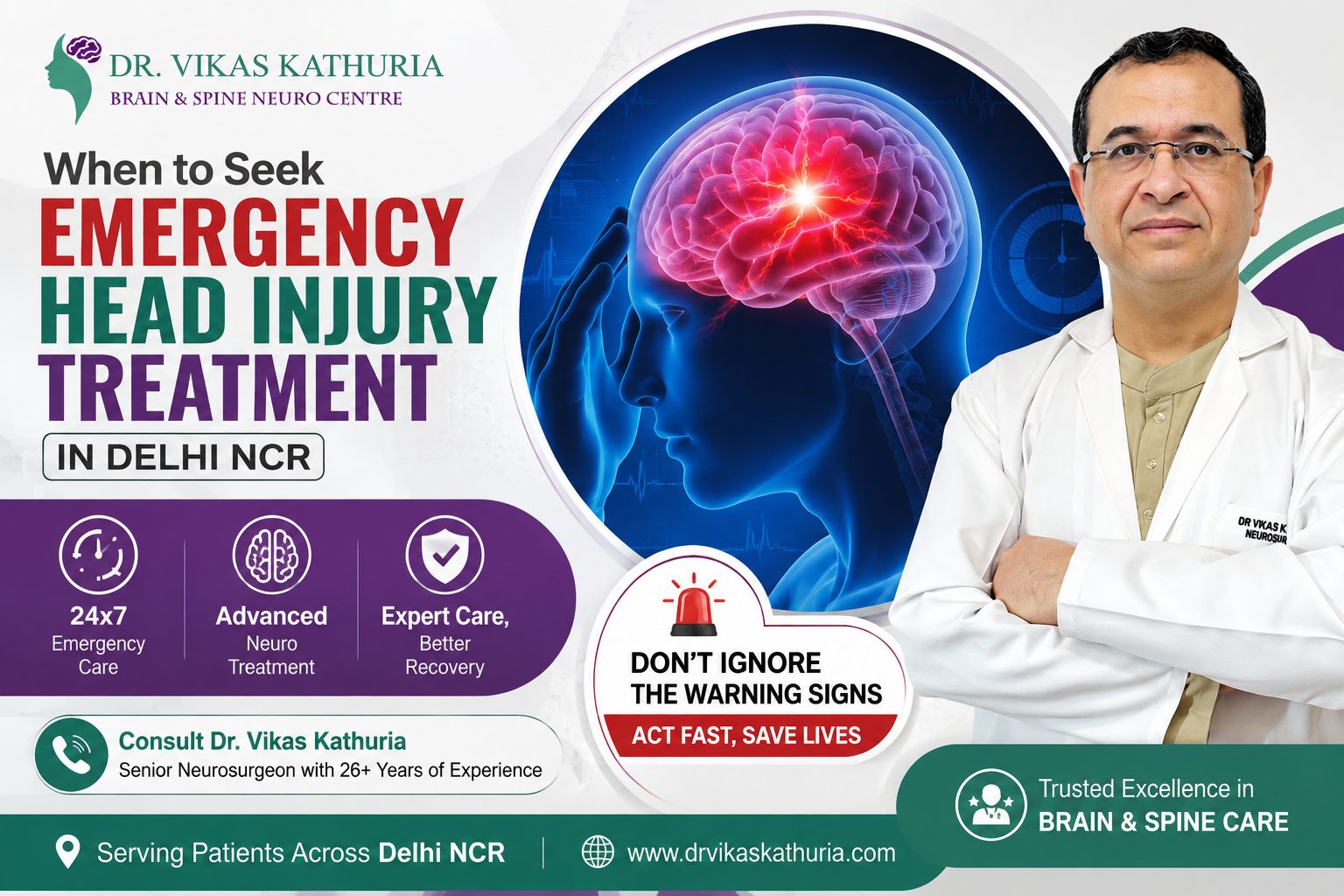
Head Injury Treatment in Delhi NCR: Causes, Symptoms & Treatment Options
A blow to the head can look minor on the outside. However, it can still cause serious damage inside. That is why timely and accurate Head Injury Treatment in Delhi NCR matters so much. In fact, it can make the difference between a full recovery and a lifelong complication. A head injury can happen in many ways. For example, it could be a fall at home, a road accident on NH-48, or a sports injury. In every case, a qualified neurosurgeon should assess the injury without delay. Dr. Vikas Kathuria is a senior consultant neurosurgeon with 26+ years of experience across Gurgaon and the wider Delhi NCR region. So far, he has treated thousands of patients with head injuries, ranging from mild concussions to life-threatening brain trauma.
In this article, we’ll walk you through what causes head injuries. We’ll also cover how to recognize the warning signs, how doctors diagnose severity, and what treatment options are available. As a result, you’ll know exactly what to expect and when to seek help.
Experienced a head injury recently? Don’t wait for symptoms to worsen — get it evaluated by a senior neurosurgeon today.
What Is a Head Injury?
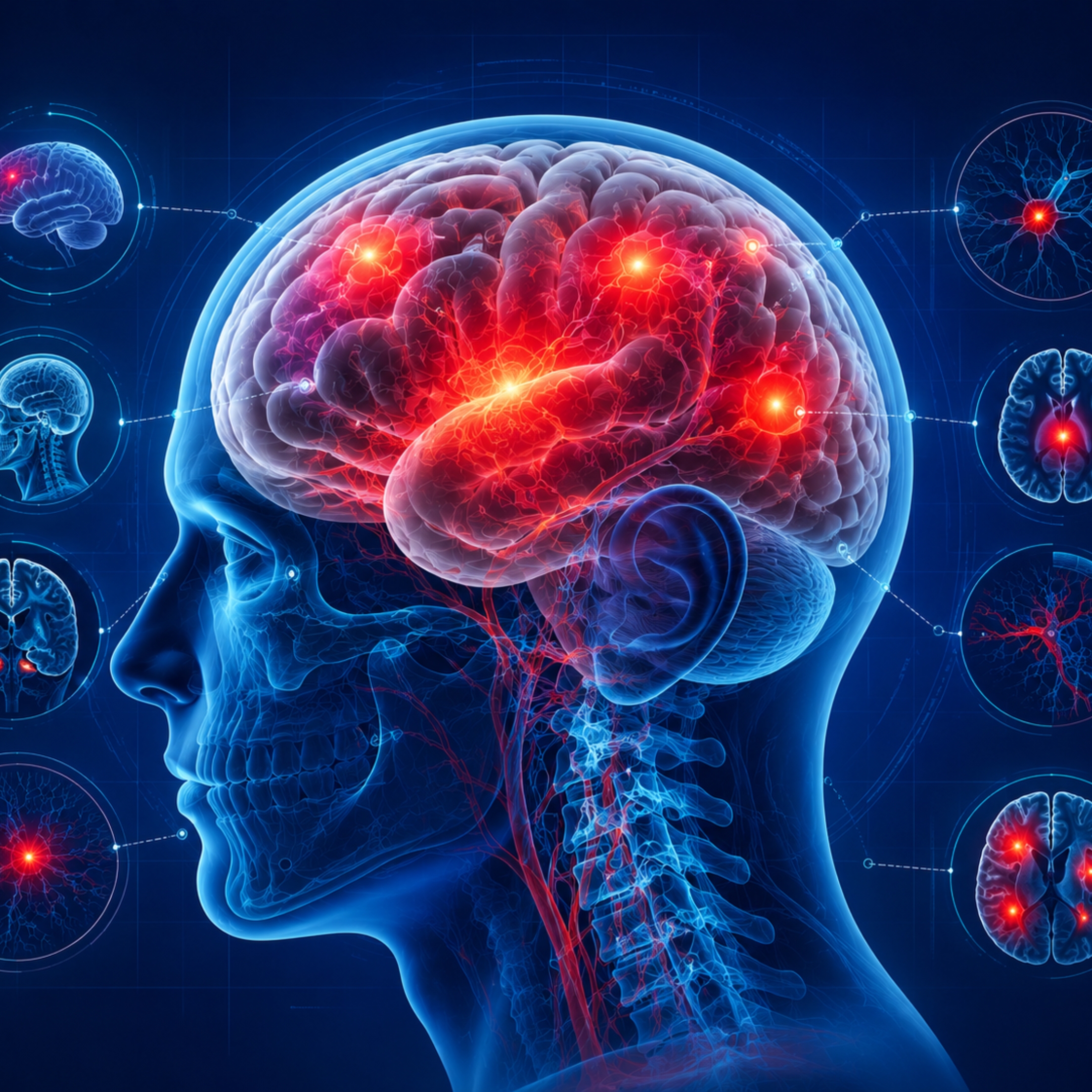
A head injury refers to any trauma to the scalp, skull, or brain. It can range from a minor bump that causes a bruise to a severe impact that results in bleeding, swelling, or fractures. Generally, head injuries fall into two categories. The first is a closed head injury, where the skull stays intact but the brain is jolted inside it. The second is an open or penetrating head injury, where an object breaks through the skull and damages brain tissue directly. Because the brain controls nearly every function in the body, even a mild-looking injury can have internal effects that aren’t visible right away.
Common Causes of Head Injuries in Delhi NCR & Gurgaon
Delhi NCR has dense traffic, rapid urbanization, and a high commuter volume. As a result, it is one of the regions where head trauma cases are frequently reported. The most common causes seen in clinical practice include:
- Road traffic accidents — two-wheeler and pedestrian accidents are especially common on highways like NH-48 and the Delhi-Gurgaon Expressway
- Falls at home or at construction sites, particularly among elderly patients and children
- Sports-related injuries, including cricket, cycling, and contact sports
- Workplace accidents involving machinery or falling objects
- Physical assault or violent trauma
Two-wheelers make up a large share of Gurgaon’s daily commute. Therefore, helmet-related head trauma is one of the most frequent emergency cases neurosurgeons handle in this region.
Types of Head Injuries
Not all head injuries are the same. Instead, the right treatment depends heavily on the type and severity of the trauma:
- Concussion — A mild traumatic brain injury caused by a sudden jolt or blow. Symptoms are usually temporary. Still, they need medical evaluation.
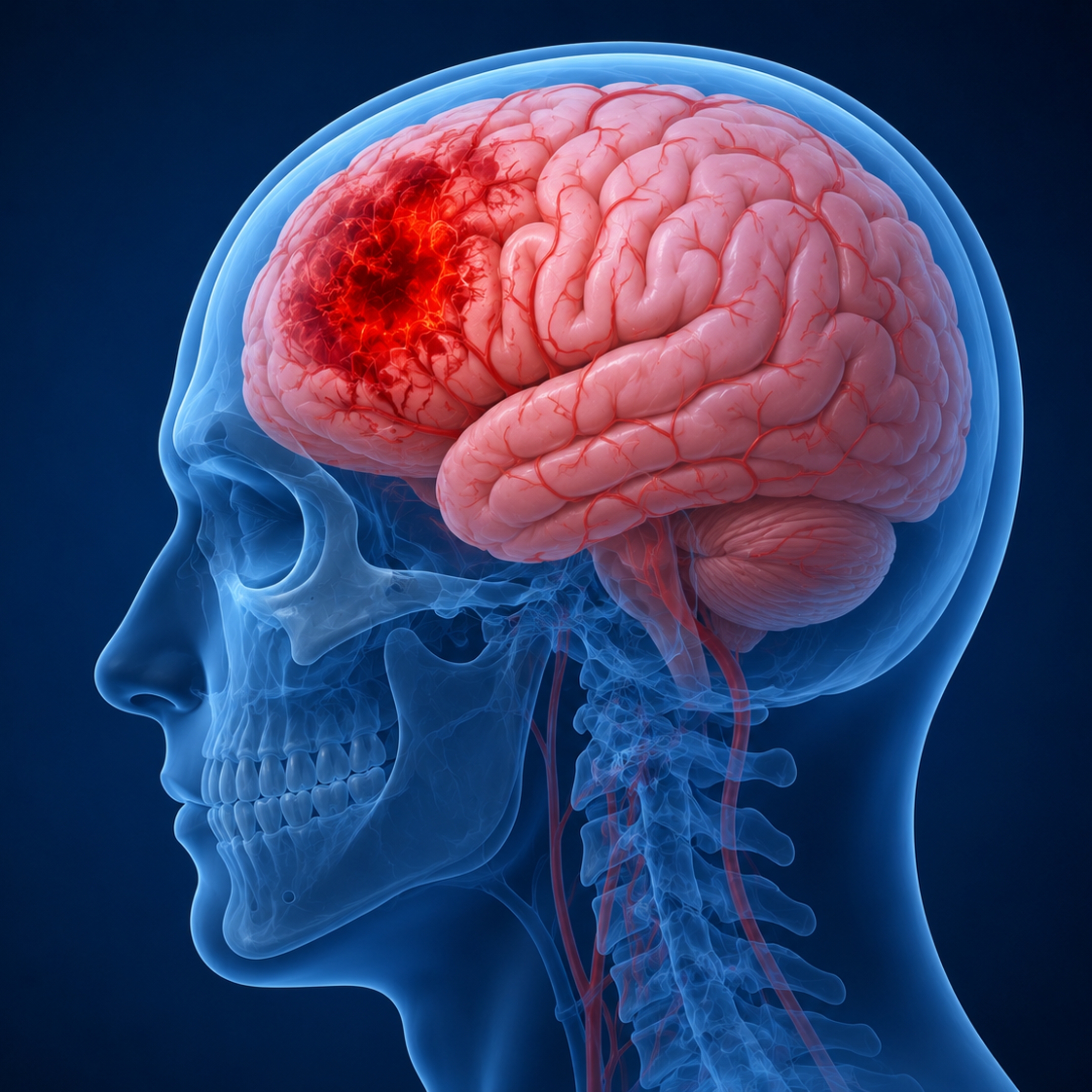
- Cerebral Contusion — A bruise on the brain tissue itself. This can cause swelling, so it requires close monitoring.
- Skull Fracture — A break in the skull bone. It may or may not come with damage to the brain underneath.
- Penetrating Head Injury — This occurs when an object pierces the skull and enters brain tissue. It often requires emergency surgery.
- Traumatic Brain Injury (TBI) — A broader term covering mild, moderate, and severe brain damage caused by an external force. If untreated, it may lead to long-term cognitive or physical impairment.
Symptoms You Should Never Ignore
Some head injury symptoms appear right away. Others, however, take hours or even days to surface. Either way, watch for:
- Persistent or worsening headache
- Nausea or repeated vomiting
- Confusion, disorientation, or difficulty concentrating
- Slurred speech or difficulty speaking
- Loss of consciousness, even briefly
- Blurred vision or unequal pupil size
- Weakness or numbness in the arms or legs
- Seizures
- Clear fluid draining from the nose or ears
If you or someone around you shows any of these symptoms after a head injury, don’t wait. Instead, seek immediate medical attention, since untreated internal bleeding or swelling can escalate very quickly.
Noticing any of these symptoms? Reach out immediately — early evaluation can prevent serious complications.
When to Seek Emergency Head Injury Treatment in Delhi NCR
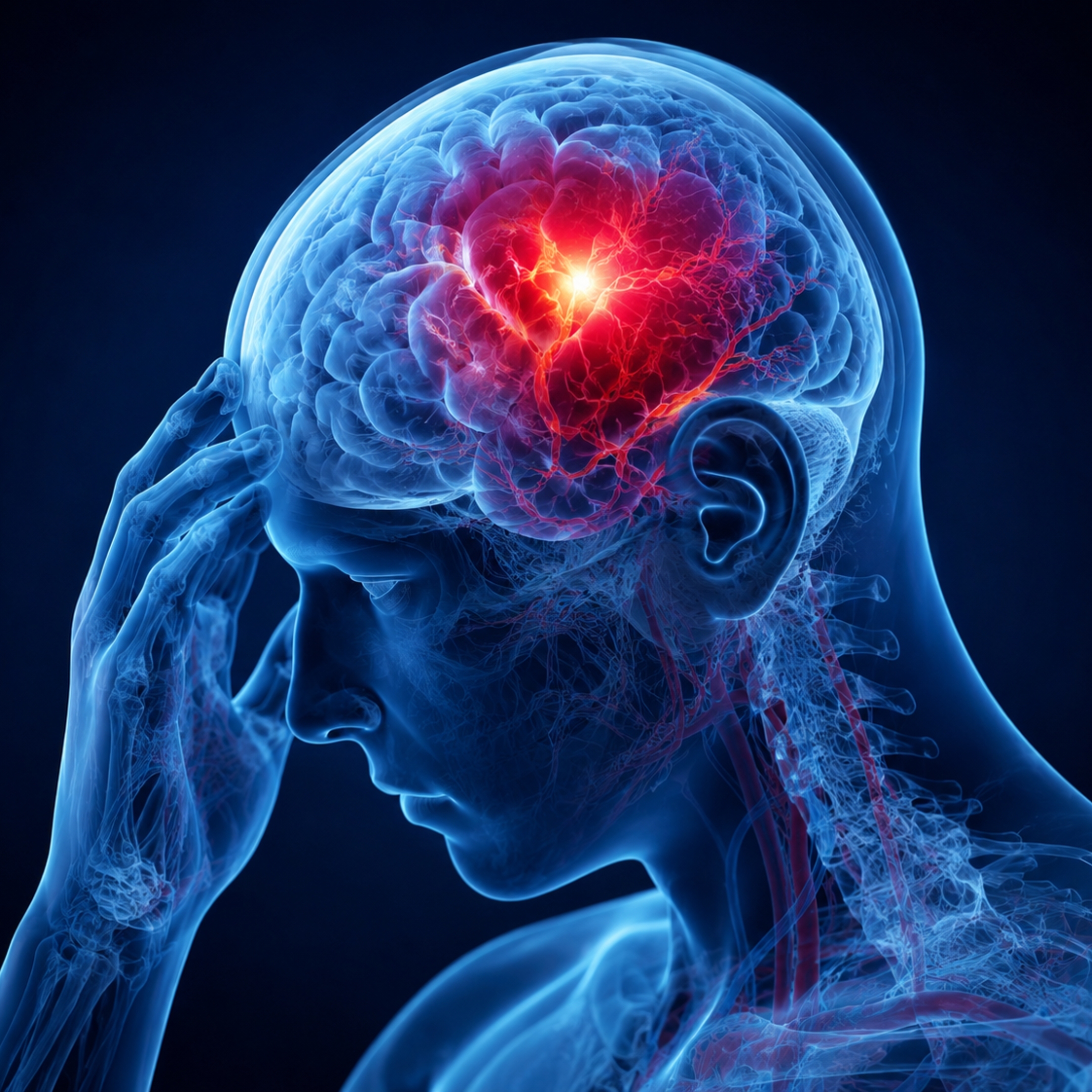
Not every bump on the head needs a hospital visit. That said, certain red flags mean you should head to an emergency room right away. These include repeated vomiting, seizures, loss of consciousness lasting more than a few seconds, worsening confusion, or an inability to recognize familiar people or places. Additionally, children and elderly patients should be evaluated even after seemingly minor falls, since their symptoms are often harder to detect early.
How Head Injuries Are Diagnosed
Accurate diagnosis is the first step of effective treatment. When a patient arrives with a head injury, the neurosurgical team typically follows this process:
- Glasgow Coma Scale (GCS) assessment — a quick scoring system used to gauge the severity of the brain injury based on eye, verbal, and motor response
- CT scan — the fastest and most widely used imaging tool to detect bleeding, swelling, or fractures
- MRI scan — used for a more detailed look at soft tissue damage, especially when symptoms persist despite a normal CT scan
- Neurological examination — checking reflexes, coordination, memory, and cognitive function
Head Injury Treatment Options in Delhi NCR & Gurgaon
Treatment depends entirely on the severity of the injury. Broadly speaking, it falls into two categories: non-surgical and surgical care.
Non-Surgical Treatment
Most concussions, along with other mild to moderate head injuries, are usually managed without surgery. Instead, treatment typically includes:
- Rest and close observation for 24–48 hours
- Pain-relief and anti-nausea medication
- Gradual return to physical and mental activity
- Regular follow-up scans if symptoms persist
Surgical Treatment
Severe head injuries are different. In particular, cases involving bleeding, brain swelling, or skull fractures may require surgical intervention, such as:
- Craniotomy — removing a section of the skull temporarily to relieve pressure or remove a blood clot, then repositioning the bone
- Decompressive craniectomy — removing a portion of the skull to allow a swollen brain room to expand, reducing the risk of permanent damage
- Intracranial pressure (ICP) monitoring — inserting a small device to continuously track pressure inside the skull in critical cases
- Skull fracture repair — stabilizing or reconstructing fractured bone, depending on severity and location
Dr. Vikas Kathuria and his team at Head Injury Treatment in Gurgaon assess each case individually. This way, they can decide the safest and most effective path forward, always prioritizing the least invasive option that gives the best outcome.
Recovery and Rehabilitation After a Head Injury
Recovery timelines vary widely, depending on the severity of the injury. For example, mild concussions often resolve within a few weeks of rest. Moderate to severe traumatic brain injuries, on the other hand, may require months of structured rehabilitation, including:
- Physiotherapy to rebuild strength, balance, and coordination
- Speech therapy for patients with communication difficulties
- Cognitive rehabilitation for memory and concentration issues
- Regular neurological follow-ups to track progress and catch any delayed complications
Family support plays a big role in recovery too. After all, patients recovering from a significant head injury often need help with daily routines. They also benefit greatly from emotional support and encouragement to stick with their rehabilitation plan.
Head Injuries in Children vs. Adults
Head injuries don’t always present the same way in children as they do in adults. So, diagnosis needs a slightly different approach for each age group. Children, especially toddlers and infants, cannot always describe their symptoms clearly. Instead, caregivers need to watch closely for behavioral changes, such as excessive crying, refusal to feed, unusual drowsiness, or repeated vomiting after a fall. A child’s skull is also still developing. Therefore, even a seemingly minor bump can sometimes cause more internal movement of the brain than expected.
Adults face different risks. Working professionals commuting daily across Gurgaon and Delhi NCR often get head injuries from two-wheeler accidents, workplace mishaps, or falls at construction sites. Adults are also more likely to underestimate a mild head injury. As a result, they may delay treatment and continue their workday despite a persistent headache or dizziness. Meanwhile, an underlying complication, like a slow brain bleed, can worsen unnoticed. Elderly patients fall into a separate risk category altogether. Age-related changes in the brain and blood vessels make them more prone to bleeding, even after a minor fall. On top of that, their symptoms can take longer to appear.
Preventing Head Injuries: Safety Tips for Delhi NCR Commuters
Not every head injury can be prevented. Still, a few precautions can significantly lower the risk, especially given how much of Delhi NCR’s population relies on two-wheelers and daily highway commutes:
- Always wear a properly fitted, ISI-certified helmet while riding a two-wheeler, even for short distances
- Follow speed limits on high-traffic stretches like NH-48 and the Delhi-Gurgaon Expressway
- Childproof homes with corner guards and non-slip mats, especially around stairs
- Ensure proper safety gear is used during contact sports or cycling
- Install handrails and adequate lighting for elderly family members at home to reduce fall risk
- Avoid climbing on unstable furniture or ladders without support
Overall, these small changes go a long way. In fact, they help reduce the number of preventable head trauma cases seen in emergency rooms across the region every year.
Why Choose Dr. Vikas Kathuria for Head Injury Treatment in Delhi NCR
Dr. Vikas Kathuria has over 26 years of experience and has treated 2.5 lakh+ patients. He is a senior consultant neurosurgeon at Max Hospital, Gurgaon, and is also associated with several other leading hospitals across Gurgaon, Delhi, and Rohtak. His approach to head injury cases combines rapid, accurate diagnosis with a treatment plan tailored to each patient’s specific condition. In other words, surgery is only recommended when truly necessary. Some patients also deal with related conditions, such as brain hemorrhage or brain stroke, which can sometimes accompany severe head trauma. In these cases, the same experienced team provides continuous care.
FAQs on Head Injury Treatment in Delhi NCR
Is every head injury serious enough to need a doctor?
Not always. Still, it’s always safer to get checked, especially if there was any loss of consciousness, confusion, or vomiting after the injury. After all, some complications don’t show symptoms right away.
How long does recovery from a head injury take?
Mild concussions often improve within one to two weeks. Moderate to severe injuries, on the other hand, can take several months, depending on the extent of the damage and the rehabilitation required.
Can a head injury cause problems years later if untreated?
Yes, it can. Untreated or poorly managed head injuries can lead to chronic headaches, memory issues, mood changes, or, in rare cases, long-term neurological complications. Fortunately, early evaluation reduces this risk significantly.
What is the first thing to do after a head injury?
First, keep the person still and avoid moving their neck unnecessarily. Next, apply a cold compress if there’s swelling. Most importantly, seek medical attention immediately if there are any warning signs, such as vomiting, confusion, or loss of consciousness.
Do all head injuries require a CT scan?
Not all of them. However, a CT scan is recommended if there was loss of consciousness, severe headache, repeated vomiting, or any signs of a skull fracture, since it’s the fastest way to rule out internal bleeding.
Where can I get expert Head Injury Treatment in Delhi NCR?
Dr. Vikas Kathuria provides expert Head Injury Treatment in Gurgaon and across Delhi NCR. Consultations are available at Max Hospital, Gurgaon, and several affiliated hospitals in the region. You can also book a consultation online.
Conclusion
Head injuries can range from a minor bump to a life-threatening emergency. Either way, the safest approach is to get a proper medical evaluation rather than wait and see if symptoms improve on their own. With prompt diagnosis and the right treatment plan, most patients recover well, even from moderate to severe trauma. So, if you or a family member has experienced a head injury, don’t delay. Consult Dr. Vikas Kathuria today for expert Head Injury Treatment in Delhi NCR and Gurgaon.
Get expert Head Injury Treatment in Delhi NCR today. Consultation fee: ₹2,500. Online and in-person appointments available at Max Hospital, Gurgaon, and affiliated centres across Delhi NCR.