


Brachial Plexus Injury: Causes, Diagnosis & Recovery
Arm weakness or numbness after an accident? Learn about brachial plexus injury causes, diagnosis and recovery options — from the neuro specialists at Dr. Vikas Kathuria Brain & Spine Neuro Centre, Gurgaon.
📍 Delhi NCR
📍 Faridabad
About This Service
At Dr. Vikas Kathuria Brain & Spine Neuro Centre, we provide comprehensive evaluation and management of brachial plexus injuries. We treat patients across Gurgaon, Delhi NCR, and Faridabad. The injury may result from a road accident, a sports trauma, a birth-related nerve stretch, or a fall. In every case, our neuro team focuses on early diagnosis, nerve-focused treatment planning, and structured rehabilitation, and this approach helps patients regain arm and hand function. We assess every patient individually, so treatment plans range from conservative nerve care and physiotherapy to advanced surgical nerve repair when required.

Consult Dr. Vikas Kathuria
Dr. Vikas Kathuria and our team diagnose nerve injuries accurately. We then guide patients through every stage of recovery — from the first consultation and imaging to physiotherapy and, if needed, surgical nerve repair. So, book a consultation today for a personalised assessment of your arm weakness, numbness, or nerve pain.
What Is a Brachial Plexus Injury?
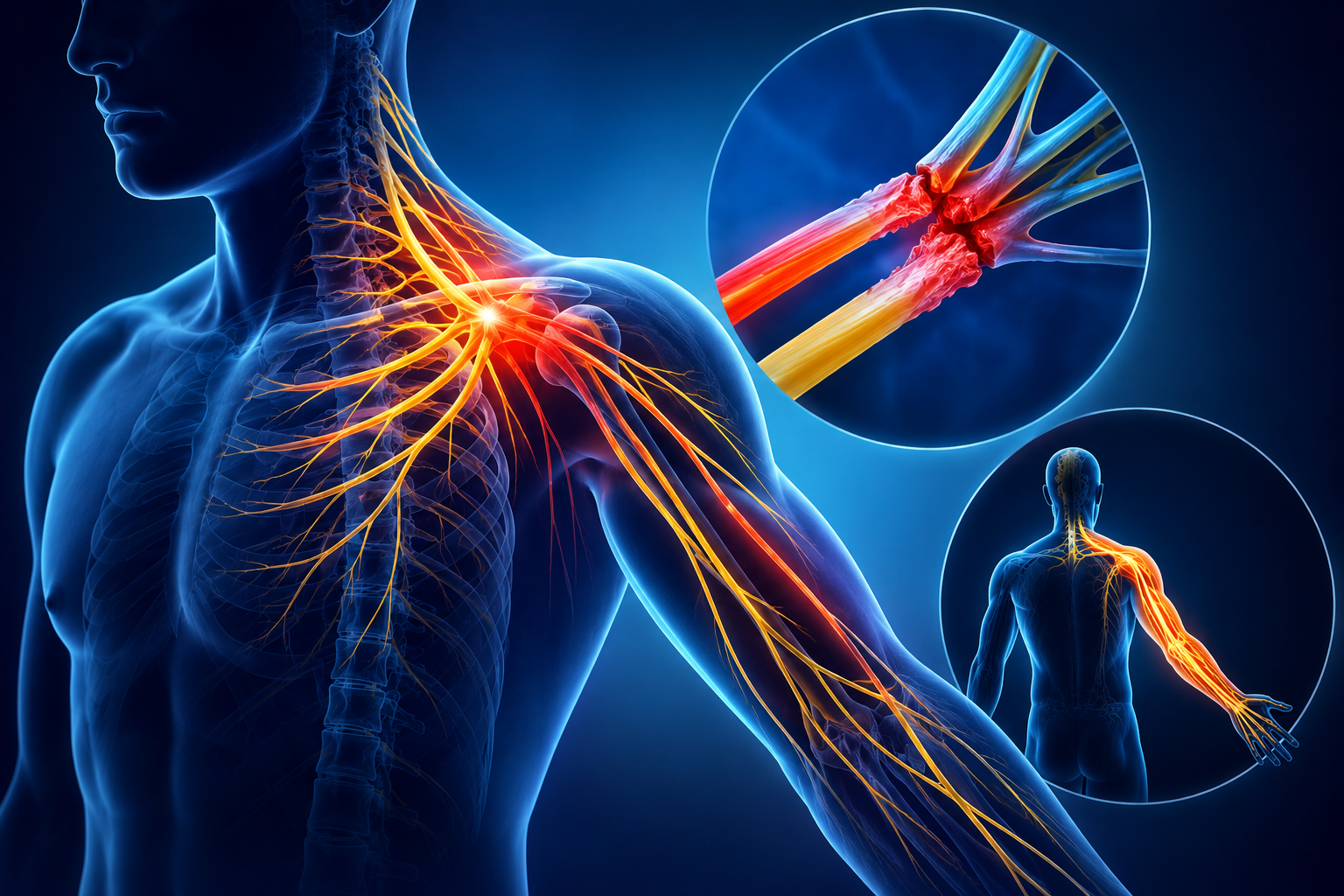
The brachial plexus is a network of nerves that runs from the spinal cord in the neck, through the shoulder, and into the arm and hand. These nerves control movement and sensation in the shoulder, elbow, wrist, and fingers. Doctors call it a brachial plexus injury (BPI) when this nerve network stretches, compresses, or tears. Depending on the severity, it can cause anything from mild tingling and weakness to complete paralysis of the arm. This condition falls under our broader neuro care services, alongside the other nerve and spine conditions we treat at the centre.
Brachial plexus injuries can affect people of any age. Newborns may experience nerve stretch during a difficult delivery, while adults often suffer high-impact trauma in road accidents. Since the arm plays such a central role in daily activities, timely diagnosis and treatment become essential to prevent long-term disability.
Common Causes of Brachial Plexus Injury
- Road traffic accidents: High-speed motorbike and car accidents remain among the leading causes of brachial plexus injuries in Gurgaon and Delhi NCR. These accidents often stretch the neck and shoulder suddenly and violently.
- Sports injuries: In contact sports such as wrestling, football, and rugby, the shoulder can get forced downward while the head moves the opposite way. This stretches the nerve plexus, an injury commonly called a “stinger”.
- Birth-related injury: Difficult deliveries, particularly those involving shoulder dystocia, can stretch a newborn’s brachial plexus. This leads to a condition known as Erb’s palsy.
- Falls: Falling directly onto the shoulder or outstretched arm from a height can compress or tear the nerves.
- Penetrating injuries: Stab wounds or deep lacerations near the neck and shoulder can directly damage the nerve fibres.
- Tumours or radiation: Likewise, growths pressing on the plexus, or scarring from past radiation therapy, can gradually damage nerve function.
- Surgical or positional trauma: Occasionally, prolonged abnormal arm positioning during surgery under anaesthesia can stretch the plexus.
Signs & Symptoms to Watch For
The symptoms vary based on which part of the brachial plexus the injury affects and how severe the damage is. Common warning signs include:
| Symptom | What It May Indicate |
|---|---|
| Sudden arm weakness or heaviness | Motor nerve involvement |
| Numbness or tingling in arm/hand | Sensory nerve involvement |
| Burning or electric-shock-like pain | Nerve root irritation or stretch |
| Complete inability to move the arm | Severe or complete plexus injury |
| Limp, dangling arm (in newborns) | Possible Erb’s palsy |
| Muscle wasting over time | Chronic, untreated nerve damage |
If you or a family member notices any of these symptoms after an accident, fall, or delivery, seek a neuro consultation promptly. Early evaluation, after all, significantly improves the chances of good recovery.
How Is Brachial Plexus Injury Diagnosed?
At our Gurgaon centre, diagnosis begins with a detailed clinical history. We then perform a hands-on neurological examination to assess muscle strength, reflexes, and sensation across the shoulder, arm, and hand. Based on these findings, we may recommend further tests:
Clinical Examination
The specialist checks the pattern of weakness and numbness to identify the nerve roots involved (C5 to T1). This also helps determine whether the injury is an upper, lower, or complete plexus type.
Nerve Conduction Study & EMG
Electromyography (EMG) and nerve conduction studies measure how well electrical signals travel through the nerves and muscles. Together, these tests help pinpoint the exact site and severity of nerve damage.
MRI of the Brachial Plexus
MRI imaging provides a detailed view of the nerve roots and surrounding soft tissue. It helps identify nerve root avulsion, stretch injury, or compression from a mass.
CT Myelography
In select cases, we use this specialised imaging technique to detect nerve root avulsions from the spinal cord. It becomes particularly useful when we consider surgical planning.
Treatment Options for Brachial Plexus Injury
Treatment depends on the type, location, and severity of the injury, as well as the time that has passed since it occurred. Based on these factors, our neuro team designs a personalised plan that may include:
- Observation & conservative care: Mild stretch injuries (neurapraxia) often recover on their own over weeks to months. We monitor these closely with regular follow-up.
- Physiotherapy & occupational therapy: Meanwhile, targeted exercises help maintain joint flexibility, prevent stiffness, and retrain muscles as nerves recover.
- Pain management: In addition, medications and nerve-focused pain relief protocols help manage burning or shooting nerve pain during recovery.
- Nerve repair surgery: For torn or severely damaged nerves, we may recommend direct nerve repair or nerve grafting to restore continuity.
- Nerve transfer surgery: Here, we reroute healthy, less critical nerves to restore function to more important muscles — a technique that proves especially useful in root avulsion injuries.
- Tendon transfer & reconstructive surgery: Finally, in long-standing injuries, tendon transfers can help restore useful arm and hand movement.
Surgical decisions are time-sensitive. Nerve repair and nerve transfer procedures generally give the best results within the first few months after injury. Therefore, we strongly recommend prompt evaluation at a specialised neuro centre rather than a “wait and watch” approach for significant injuries.
Recovery & Rehabilitation Timeline
Recovery from a brachial plexus injury can take anywhere from a few weeks to over a year, depending on the severity of nerve damage. Nerves, after all, regenerate slowly — roughly one millimetre per day. So, patience and consistent rehabilitation become essential. Our recovery programme typically includes:
- Early-stage splinting and positioning to protect the shoulder and prevent contractures.
- Progressive physiotherapy to maintain range of motion and prevent muscle wasting.
- Electrical stimulation therapy to support muscle activity while nerves regenerate.
- Occupational therapy to help patients adapt daily activities during recovery.
- Regular follow-up with EMG monitoring to track nerve regeneration progress.
- Psychological support and counselling, since long recovery periods can be emotionally challenging.
With the right combination of timely diagnosis, appropriate treatment, and structured rehabilitation, many patients regain significant arm and hand function. Throughout this process, our team works closely with each patient and their family to set realistic goals and track progress at every stage.
Why Choose Dr. Vikas Kathuria Brain & Spine Neuro Centre?
Dr. Vikas Kathuria Brain & Spine Neuro Centre is a trusted destination for brachial plexus injury treatment in Gurgaon. We serve patients from across Gurgaon, Delhi NCR, and Faridabad. Our centre combines detailed neurological assessment, advanced diagnostic imaging, and a rehabilitation-focused approach to help patients recover arm function after nerve injury. After all, a brachial plexus injury can affect a patient’s independence, work, and quality of life. That is why our team focuses on clear communication, realistic recovery planning, and consistent follow-up care throughout treatment.
Patients travelling from Delhi NCR and Faridabad can conveniently access our Gurgaon-based centre for consultations, diagnostic testing, and ongoing rehabilitation support. We coordinate all of this under one roof. So, to know more about our specialists or to check current availability, visit our About Us page or book an appointment online.
Experiencing Arm Weakness or Numbness After an Injury?
Don’t wait — early evaluation improves recovery outcomes. Book a consultation with our neuro specialists in Gurgaon today.
Frequently Asked Questions
1. What are the first signs of a brachial plexus injury?
The earliest signs usually include sudden weakness or heaviness in the arm, numbness or tingling, and a burning or shooting pain that radiates from the shoulder into the arm. In newborns, however, a limp or unmoving arm after a difficult delivery is often the first sign.
2. How long does it take to recover from a brachial plexus injury?
Recovery time varies widely. Mild stretch injuries may improve within a few weeks to months. More severe injuries involving nerve tears, however, can take a year or longer, especially when surgical nerve repair or nerve transfer becomes necessary.
3. Is surgery always required for a brachial plexus injury?
No. Many mild to moderate stretch injuries recover with conservative treatment and physiotherapy alone. We generally consider surgery only for complete nerve tears, root avulsions, or when there is no sign of recovery after a period of close monitoring.
4. What tests are used to diagnose brachial plexus injuries?
Diagnosis typically involves a detailed clinical examination, along with nerve conduction studies and EMG to assess nerve and muscle activity. We also use MRI of the brachial plexus to visualise the extent of nerve damage. In select surgical planning cases, we may add CT myelography.
5. Where can I get brachial plexus injury treatment near Gurgaon?
Dr. Vikas Kathuria Brain & Spine Neuro Centre in Gurgaon offers complete evaluation and treatment for brachial plexus injuries. We serve patients from Gurgaon, Delhi NCR, and Faridabad, and we offer diagnosis, physiotherapy-based rehabilitation, and surgical options as needed.