


For decades, a brain stroke meant an elderly relative with high blood pressure. Today, neurosurgeons in Gurgaon and across Delhi NCR meet patients in their 20s, 30s and early 40s who arrive after a sudden weak arm, slurred speech or the worst headache of their lives. Stroke in young adults is real, often missed, and frequently treatable when recognised in time. Roughly 10 to 20 per cent of strokes in India occur in people younger than 50, a far higher share than in many Western countries. This guide explains the stroke in young age causes doctors actually see, the warning signs people dismiss, and what to do next.
🚨 Suspect a stroke right now?
Do not wait for it to pass. Call 112 (or ambulance 102 / 108), note the exact time symptoms began, and go to a stroke-ready hospital with CT/MRI and 24×7 neuro care. Our BE-FAST and golden hour guide explains the first minutes step by step.
⚡ Quick Answer in 30 Seconds
- Young stroke usually means a stroke before age 45 to 50, and it is not rare in India.
- Main causes: silent high blood pressure, diabetes, tobacco, heart rhythm problems, clotting disorders, neck artery tears and brain bleeds from aneurysms.
- Symptoms are the same as in older adults but are often blamed on stress, tiredness or migraine.
- Outcome: younger brains often recover well when treatment starts early and rehabilitation is consistent.
Stroke in Young Age Causes: What Doctors Actually See
Doctors usually label a stroke “young” when it occurs between 18 and 45 years, although some studies stretch the limit to 50. A stroke happens when blood supply to part of the brain is blocked (ischemic) or when a brain blood vessel bursts (hemorrhagic). The World Health Organization lists stroke among the leading causes of death and disability worldwide, and brain cells begin dying within minutes.
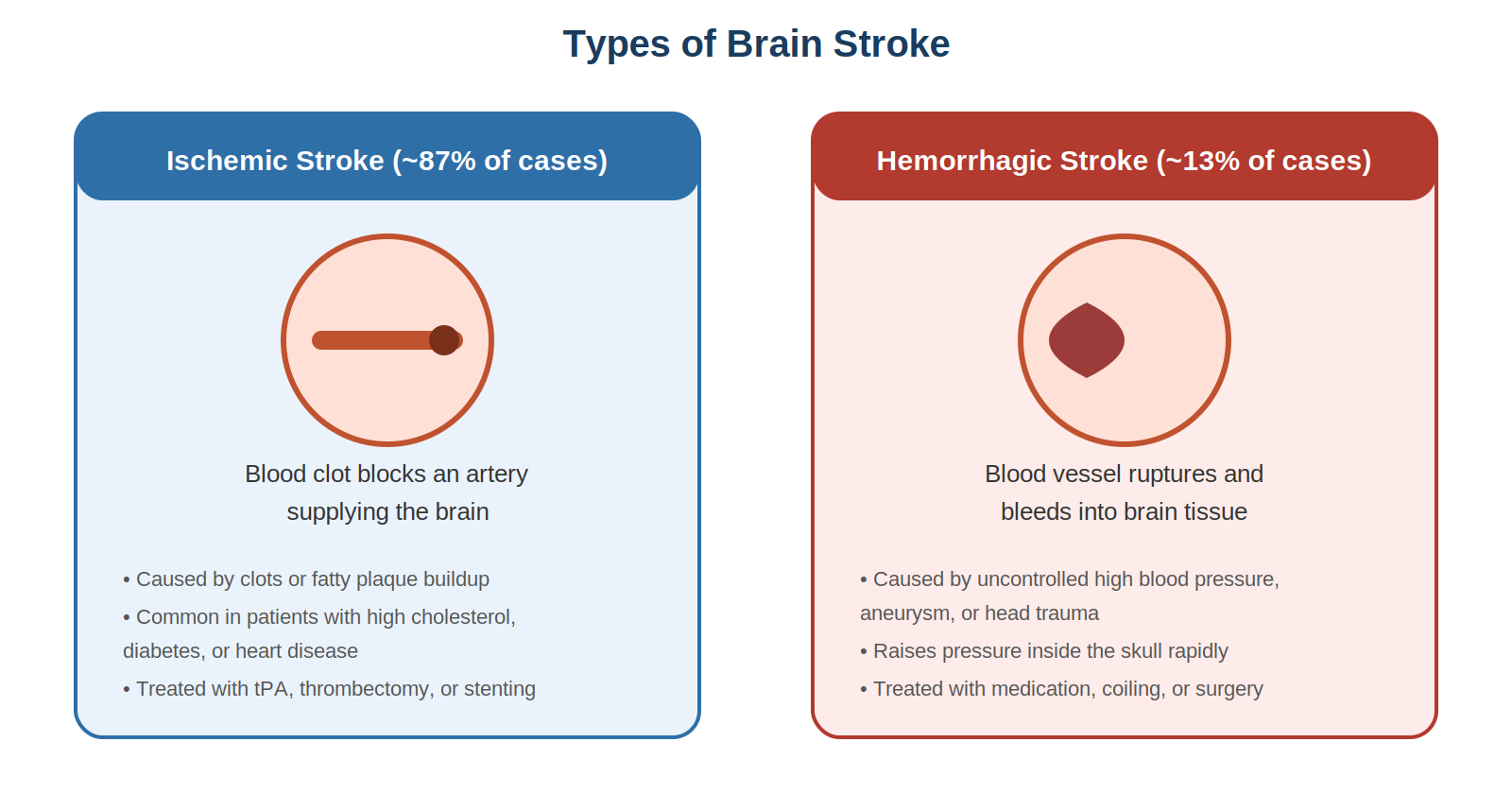
What makes stroke in young adults different is the “why”. In older patients, clogged arteries from long-standing disease dominate. In the young, doctors must look wider. A medical review of stroke in young Indians found that cerebral venous thrombosis and rheumatic heart disease are leading causes in this age group, while an older north Indian hospital series found that about one in seven young strokes was a bleed. That is why finding the cause matters as much as treating the attack.
Why Are 20s to 40s in Gurgaon & Delhi NCR Getting Strokes?
No single factor explains every case, but neurosurgeons in Delhi NCR repeatedly see the same cluster of lifestyle triggers building up silently over years.
🩺 Silent High BP
Hypertension is the biggest driver at every age. Many professionals in their 30s have never had their blood pressure checked.
💻 Desk-Bound Life
Long hours in Cyber City, Udyog Vihar or Noida offices, plus long commutes, feed obesity, high sugar and high cholesterol.
🚬 Tobacco & Alcohol
Smoking, vaping, chewing tobacco and heavy drinking damage vessel walls and thicken the blood.
😴 Sleep Debt & Stress
Night shifts, chronic stress and untreated snoring or sleep apnea are increasingly linked with stroke risk.
🏋️ Gym Supplements
Anabolic steroids, stimulant-heavy pre-workouts and recreational drugs such as cocaine can spike BP or trigger bleeding.
🌫️ Winter & Pollution
Cold weather pushes blood pressure up, and polluted air adds strain. See our note on air pollution and headaches.
Hidden Causes Beyond BP and Sugar
When a young person has a stroke despite a “healthy” life, the search turns to less obvious causes. Experts also note that in a sizeable minority of young patients, no single cause is found even after a full work-up.
| Hidden Cause | How It Leads to Stroke | Who Should Be Alert |
|---|---|---|
| Neck artery tear (dissection) | A tear in a neck artery forms a clot that travels to the brain | Active people after a neck injury, whiplash or sudden neck jerk |
| Heart rhythm or valve disease | Clots form in the heart (AFib, rheumatic valve, PFO) and travel upward | Palpitations, past rheumatic fever |
| Clotting disorders, high homocysteine | Blood clots too easily inside vessels | Repeated clots or strong family history |
| Cerebral venous thrombosis | A clot blocks veins that drain the brain | Pregnancy, the weeks after delivery, dehydration, hormonal pills |
| Migraine with aura | Associated with a higher ischemic risk in some young people | Frequent migraine with visual aura, especially with smoking |
| Aneurysm or AVM | A weak or tangled vessel ruptures and bleeds | Sudden thunderclap headache, vomiting, drowsiness |
| Moyamoya or vasculitis | Brain arteries narrow or become inflamed | Repeated mini-strokes at a young age |
If you have recurring neck pain after an accident or intense workout, do not ignore it. Early assessment through our neck pain treatment service can separate a muscle strain from something vascular.
A Neurosurgeon’s View: When a Young Stroke Is a Bleed
Many online guides focus only on clots. A neurosurgeon sees the other side: hemorrhagic stroke in the young, most often from a ruptured aneurysm, an arteriovenous malformation (AVM) or uncontrolled hypertension. The typical picture is a sudden, explosive headache with vomiting, neck stiffness, blurred vision or drowsiness. A plain CT scan within minutes tells the difference between a clot and a bleed, and the treatment is completely different. Depending on the cause, care may include strict BP control, aneurysm coiling or clipping, surgical removal of the clot or pressure-relieving procedures. Read more on brain hemorrhage treatment and brain aneurysm repair. Fitness enthusiasts should also read our guide on heavy lifting and aneurysm risk.
Warning Signs Young People Ignore
The signs of stroke in young adults follow the same BE-FAST pattern: sudden loss of Balance, Eyes (vision loss), Face droop, Arm weakness, Speech trouble and Time to call for help, as outlined by the American Stroke Association. The danger is the excuse that follows.
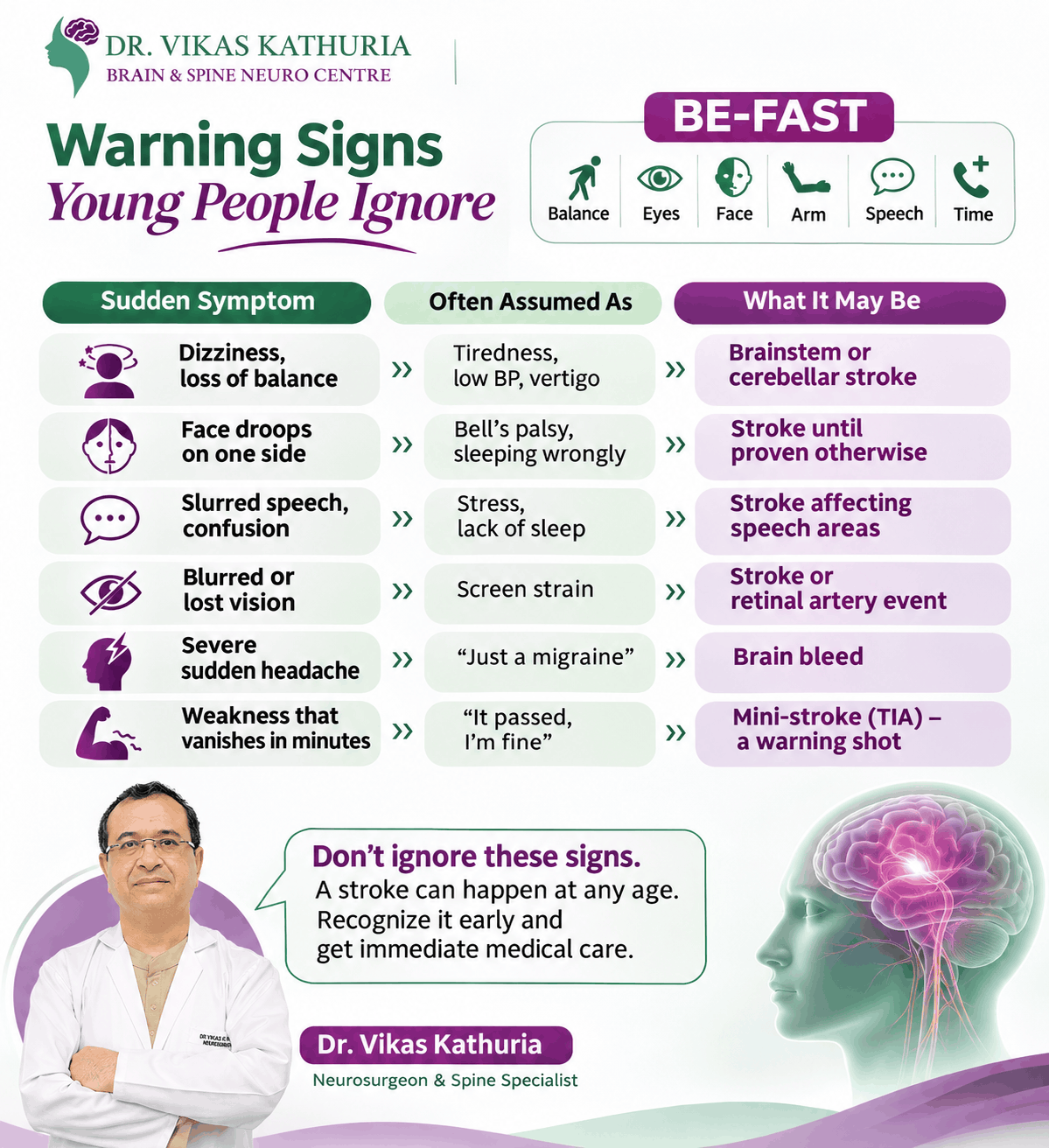
| Sudden Symptom | What People Assume | What It May Be |
|---|---|---|
| Dizziness, loss of balance | Tiredness, low BP, vertigo | Brainstem or cerebellar stroke. See vertigo vs brain problem |
| Face droops on one side | Bell’s palsy, sleeping wrongly | Stroke until proven otherwise. See Bell’s palsy vs stroke |
| Slurred speech, confusion | Stress, lack of sleep | Stroke affecting speech areas |
| Blurred or lost vision | Screen strain | Stroke or retinal artery event |
| Severe sudden headache | “Just a migraine” | Brain bleed. Compare with migraine |
| Weakness that vanishes in minutes | “It passed, I’m fine” | Mini-stroke (TIA), a warning shot |
⚠️ Myth vs Fact
- Myth: Stroke happens only after 60. Fact: It can happen in the 20s, 30s and 40s.
- Myth: I go to the gym, so I am safe. Fact: Fitness lowers risk, but neck tears, aneurysms, heart rhythm problems and supplement misuse can still cause stroke.
- Myth: If symptoms go away, I am fine. Fact: A TIA often precedes a major stroke, so get evaluated the same day.
- Myth: Stroke is untreatable. Fact: Time-sensitive treatment can save brain tissue and prevent disability.
How Doctors Find the Cause
The goal in a young patient is not just to confirm the stroke but to find out why it happened, because the answer decides how a second stroke is prevented. The work-up usually includes a CT or MRI brain scan, CT or MR angiography of the brain and neck vessels, an ECG and echocardiogram, heart rhythm monitoring and blood tests for sugar, cholesterol, clotting factors and homocysteine. Selected patients may also need a sleep study or tests for inflammatory vessel disease. Our brain stroke treatment in Gurgaon page explains each test in simple language.
Treatment: What Happens in the Golden Window
For an ischemic stroke, eligible patients may receive clot-dissolving medicine within about 4.5 hours, and mechanical thrombectomy can remove large clots, in selected cases even up to 24 hours when advanced imaging shows salvageable brain. Read more in our note on thrombolytic therapy for acute stroke. For a hemorrhagic stroke, treatment focuses on stopping the bleed, lowering pressure inside the skull and treating the source. Afterwards, long-term medicines, tight control of BP, sugar and cholesterol, and treatment of the underlying cause reduce the chance of another event.
Stroke care is a team effort. A stroke-ready hospital team handles the emergency window, while a neurosurgeon is vital for bleeds, aneurysms, vascular malformations and surgical decisions. Unsure whom to see? Our guide on neurosurgeon vs neurologist explains the difference.
Recovery After Stroke in Young Adults
Younger brains often adapt well, but recovery still takes months and depends on how early rehabilitation starts. A typical plan combines physiotherapy for strength and balance, occupational therapy to restore daily skills, speech therapy for speaking and swallowing, and emotional support, since low mood and anxiety are common. Return to work is usually gradual, and driving should resume only after your doctor clears it. Our guides on stroke rehabilitation and paralysis after stroke outline realistic timelines.

Prevention Checklist for 20s to 40s in Delhi NCR
🛡️ Simple Steps That Lower Your Risk
- Get your blood pressure checked at least once a year, and monthly if it runs high.
- Test sugar and cholesterol every year after 30, earlier with a family history.
- Walk briskly or exercise 30 minutes, five days a week.
- Quit smoking, vaping and tobacco, and limit alcohol.
- Sleep 7 to 8 hours and get chronic snoring checked.
- Avoid anabolic steroids and stimulant-heavy supplements, and never use recreational drugs.
- Discuss hormonal pills, pregnancy and migraine with aura with your doctor.
- Learn BE-FAST and teach your family and colleagues.
Noticed a warning sign or have a risk factor?
Consult Dr. Vikas Kathuria for brain stroke evaluation and neurosurgical care in Gurgaon and Delhi NCR.
Why Choose Dr. Vikas Kathuria for Stroke Care in Gurgaon?
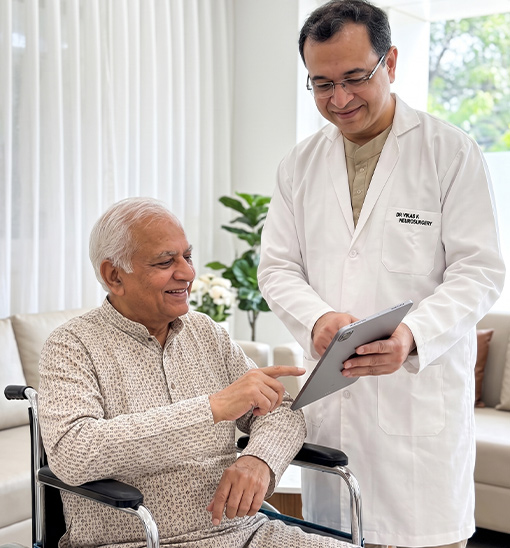
Dr. Vikas Kathuria is a Senior Consultant Neurosurgeon at Max Hospital, Gurgaon, with more than 26 years of experience in brain, spine and nerve disorders. His approach is patient-first: accurate diagnosis, a clear explanation for the family and surgery only when it is genuinely needed. He manages bleeding strokes, aneurysms, head injuries and related brain emergencies, and guides long-term recovery and prevention.
📍 Consult in Gurgaon & Delhi NCR
Clinic: Skin Aura Brain & Spine Neuro Centre, H.N. 7311, Behind DLF Super Mart 2, DLF Phase IV, near Huda City Centre Metro, Gurugram.
Hospital: Max Hospital, Sushant Lok 1, Gurugram, plus consulting hours across Gurgaon and Delhi NCR (all locations).
Timings: Mon to Sat 10:30 AM to 12:30 PM and 6:00 PM to 7:30 PM; Sunday 10:00 AM to 2:00 PM.
Fee: ₹2,500. Online video consultation available for second opinions and follow-up.
Serving: Gurgaon, Delhi, Noida, Faridabad, Ghaziabad and nearby areas.
Frequently Asked Questions About Stroke in Young Adults
What are the main stroke in young age causes?
The leading causes are uncontrolled high blood pressure, diabetes, tobacco use, heart rhythm and valve problems, clotting disorders, cerebral venous thrombosis, neck artery tears and brain bleeds from aneurysms or AVMs. In some young patients no single cause is found.
Can a 25 or 30 year old really have a stroke?
Yes. Roughly 10 to 20 per cent of strokes in India occur in people younger than 50, and cases in the 20s and 30s are no longer unusual.
What are the first symptoms of stroke in young adults?
Sudden loss of balance, vision trouble, facial droop, arm or leg weakness, slurred speech or a sudden severe headache. Use the BE-FAST test and call 112 immediately.
Can young stroke patients recover fully?
Many recover well, especially with early treatment and steady rehabilitation, though results depend on the stroke type, its size and how quickly care began.
Can stress, gym supplements or energy drinks cause a stroke?
Stress alone is rarely the only cause, but chronic stress, poor sleep and stimulant-heavy supplements can raise blood pressure. Anabolic steroids and recreational drugs are known to increase stroke risk.
Should I see a neurologist or a neurosurgeon for stroke?
Both play a role. Neurologists manage clot-related stroke medically, while a neurosurgeon is essential for bleeding strokes, aneurysms and surgical decisions.
How is stroke in young adults diagnosed?
Through a CT or MRI scan, CT or MR angiography, heart tests such as ECG and echocardiogram, and blood tests for sugar, cholesterol and clotting disorders.
What should I do if someone shows stroke signs in Gurgaon?
Call 112 or an ambulance, note the time symptoms began, give nothing by mouth, and go to the nearest stroke-ready hospital with CT/MRI. Do not drive through traffic yourself.
Medical disclaimer: This article is for general awareness and does not replace professional medical advice. In a suspected stroke, call emergency services immediately. Further reading: NINDS stroke information. Explore more neurological health guides on our blog.