


Air Pollution and Migraine: Why Delhi NCR Residents Get More Headaches
By Dr. Vikas Kathuria | Brain & Spine Neuro Centre, Gurgaon, Delhi NCR
If you live anywhere in Gurgaon, Delhi, Noida, Faridabad or Ghaziabad, chances are your headaches get worse the moment the air turns grey. This is not a coincidence. Air pollution migraine cases are rising sharply every year, and this rise is directly linked to an increase in migraine attacks and chronic headaches, and doctors across the region are seeing more patients every season. In this blog, Dr. Vikas Kathuria explains exactly how polluted air triggers migraine, who is most at risk, and what you can do to protect your brain.
Migraine is far more than “just a bad headache.” It is a neurological condition involving throbbing, one-sided pain, nausea, and extreme sensitivity to light and sound. For years, doctors linked migraine triggers mainly to stress, poor sleep, certain foods, and hormonal changes. But a growing body of research now confirms what patients in Delhi NCR have suspected for years — toxic air is itself a powerful migraine trigger.
Air Pollution Migraine: How Toxic Air Triggers Headaches
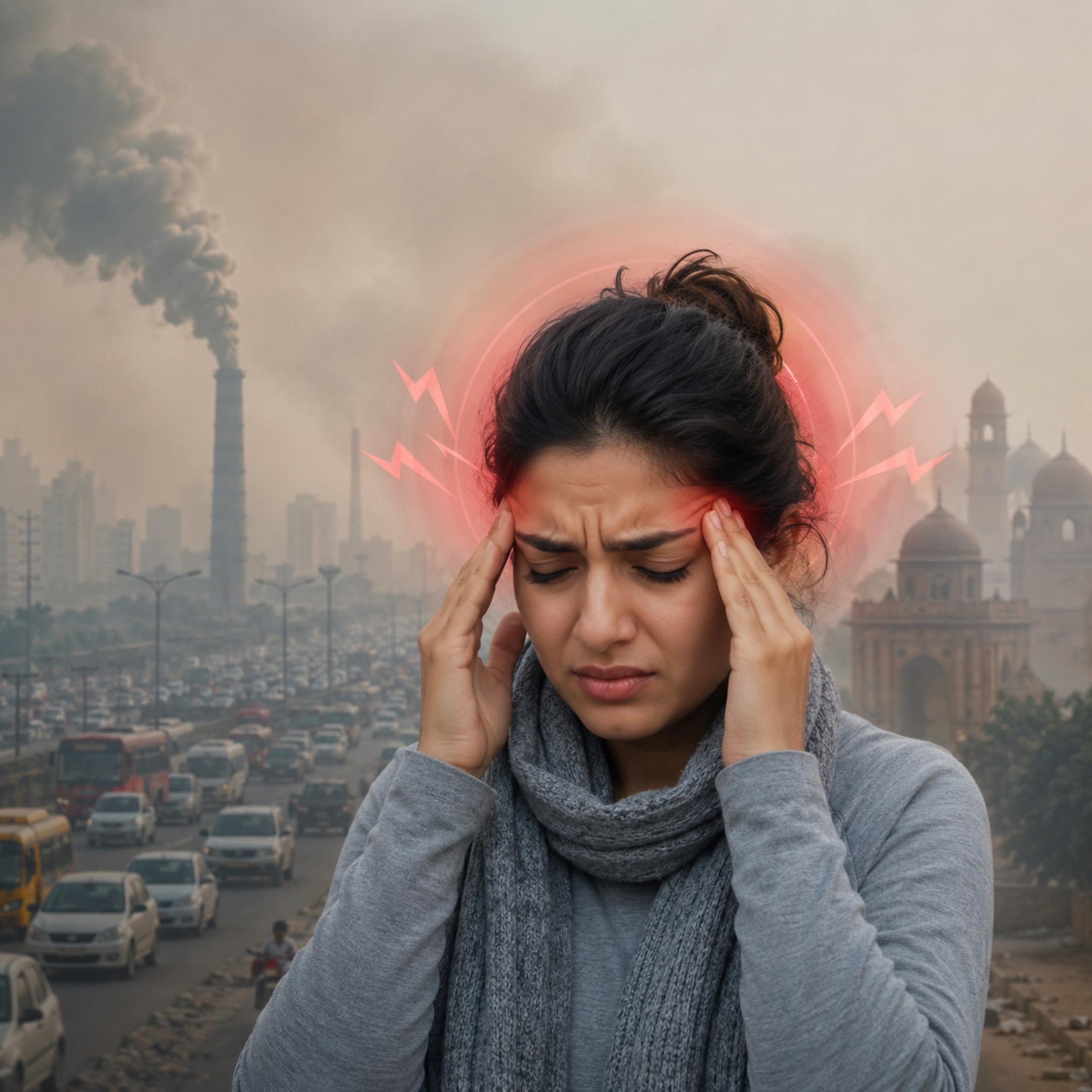
Delhi NCR regularly records some of the worst Air Quality Index (AQI) levels in the world, especially between October and January, often far above the WHO’s safe air quality guidelines. When you breathe in air loaded with PM2.5 and PM10 particulate matter, these microscopic particles do not stay in your lungs alone. They enter the bloodstream, cross the blood-brain barrier, and trigger inflammation in the blood vessels of the brain.
This inflammation is believed to be one of the key mechanisms behind pollution-triggered migraine. Once the blood vessels in the brain become irritated, they can spasm or dilate abnormally, setting off the throbbing pain that migraine sufferers know all too well. For people who already have a tendency toward headaches or migraine, even a mildly polluted day can be enough to trigger a full attack.
Quick Facts: Pollution and Your Brain
- Studies show a measurable rise in headache and migraine-related hospital visits during high-pollution days in Delhi NCR.
- Fine particulate matter (PM2.5) can cross the blood-brain barrier and trigger neuro-inflammation.
- People with an existing headache disorder are significantly more sensitive to pollution-triggered attacks.
- Winter smog, Diwali firecracker smoke, and stubble-burning season see the sharpest spike in migraine complaints.
- Indoor pollutants — incense, candles, cooking smoke, and poor ventilation — can also worsen headaches.
Why Delhi NCR Residents Face Higher Air Pollution Migraine Risk
Unlike cities with cleaner air, Gurgaon and Delhi NCR face a unique combination of factors that make pollution-triggered migraine more common and more severe:
- Seasonal smog: Post-Diwali and winter months regularly push AQI into the “severe” category, sometimes 20-30 times above the WHO safe limit.
- Long commutes: Professionals in Gurgaon’s corporate hubs spend hours in traffic, increasing direct exposure to vehicle exhaust.
- Construction dust: Rapid construction across Gurgaon and NCR adds significant particulate load to the air.
- Temperature swings: Sudden weather changes, common in this region, are themselves an independent migraine trigger — and they often coincide with poor air quality.

Persistent or worsening headaches during high-pollution days should not be ignored — timely evaluation helps identify the real trigger.
Migraine vs. Regular Headache: Is Pollution the Real Cause?
Not every headache during smog season is a migraine, and not every migraine is caused only by pollution. It helps to know the difference:
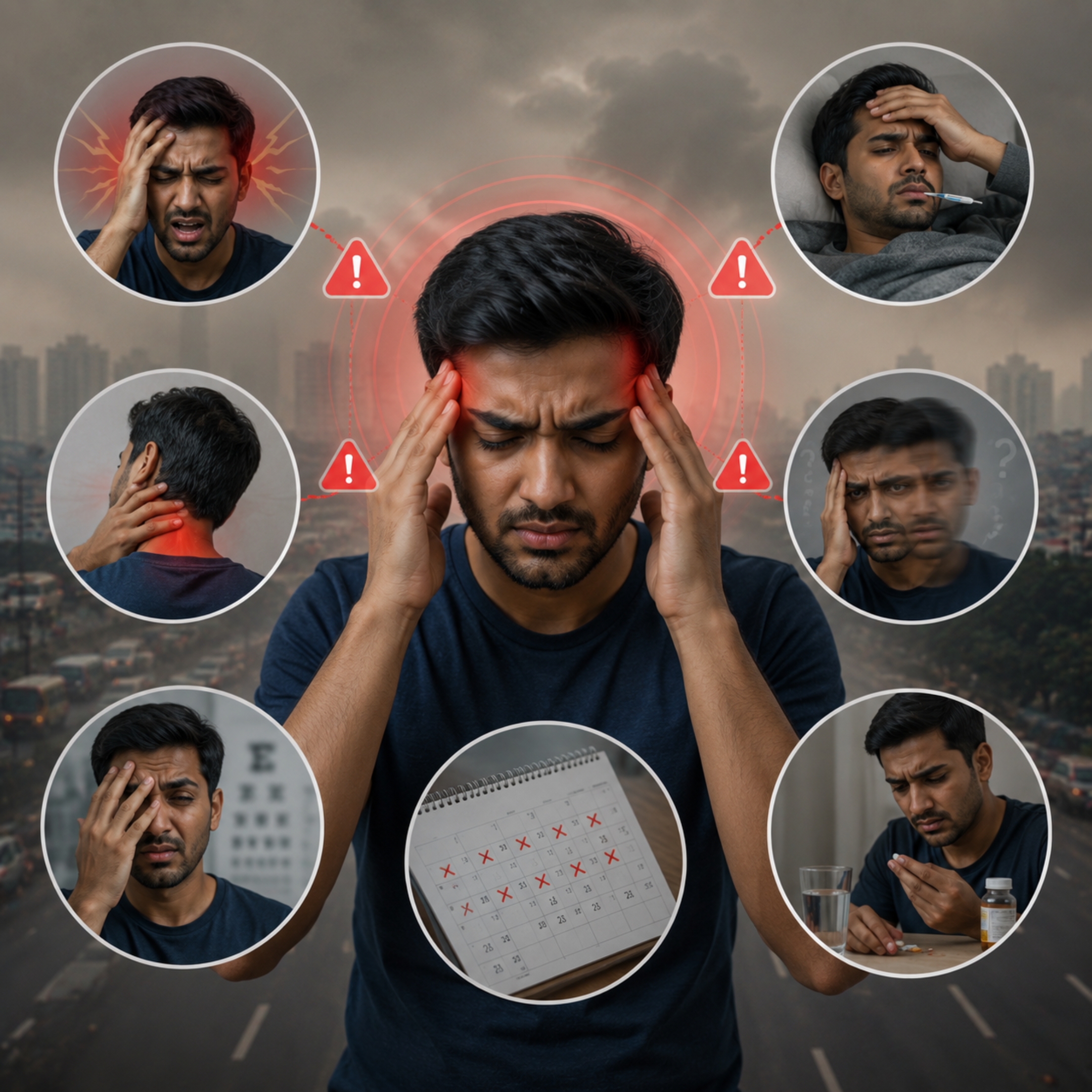
- Tension headache: A dull, constant pressure, usually on both sides of the head, often related to stress or poor posture.
- Sinus headache: Pain and pressure around the eyes, cheeks, and forehead, often worsened by pollution and allergens.
- Migraine: Throbbing, usually one-sided pain, often with nausea, light sensitivity, and sometimes a visual “aura” before the attack begins.
If your headaches become more frequent, more intense, or start appearing specifically on high-AQI days, pollution is very likely playing a role, and it’s worth having your pattern properly evaluated rather than simply reaching for another painkiller.
Common Migraine Triggers That Pollution Makes Worse
Pollution rarely acts alone. It tends to combine with, and worsen, other well-known migraine triggers, including:
- Poor sleep caused by respiratory irritation and disturbed breathing at night
- Dehydration, which is more common when people avoid outdoor activity and reduce water intake
- Increased stress from health anxiety around air quality
- Screen time and eye strain, which rises when people stay indoors more during smog season
- Skipped meals or irregular eating due to disrupted daily routines
Symptoms You Should Not Ignore
While most pollution-related headaches are manageable, certain symptoms need urgent medical attention from a neurosurgeon in Gurgaon or Delhi NCR:
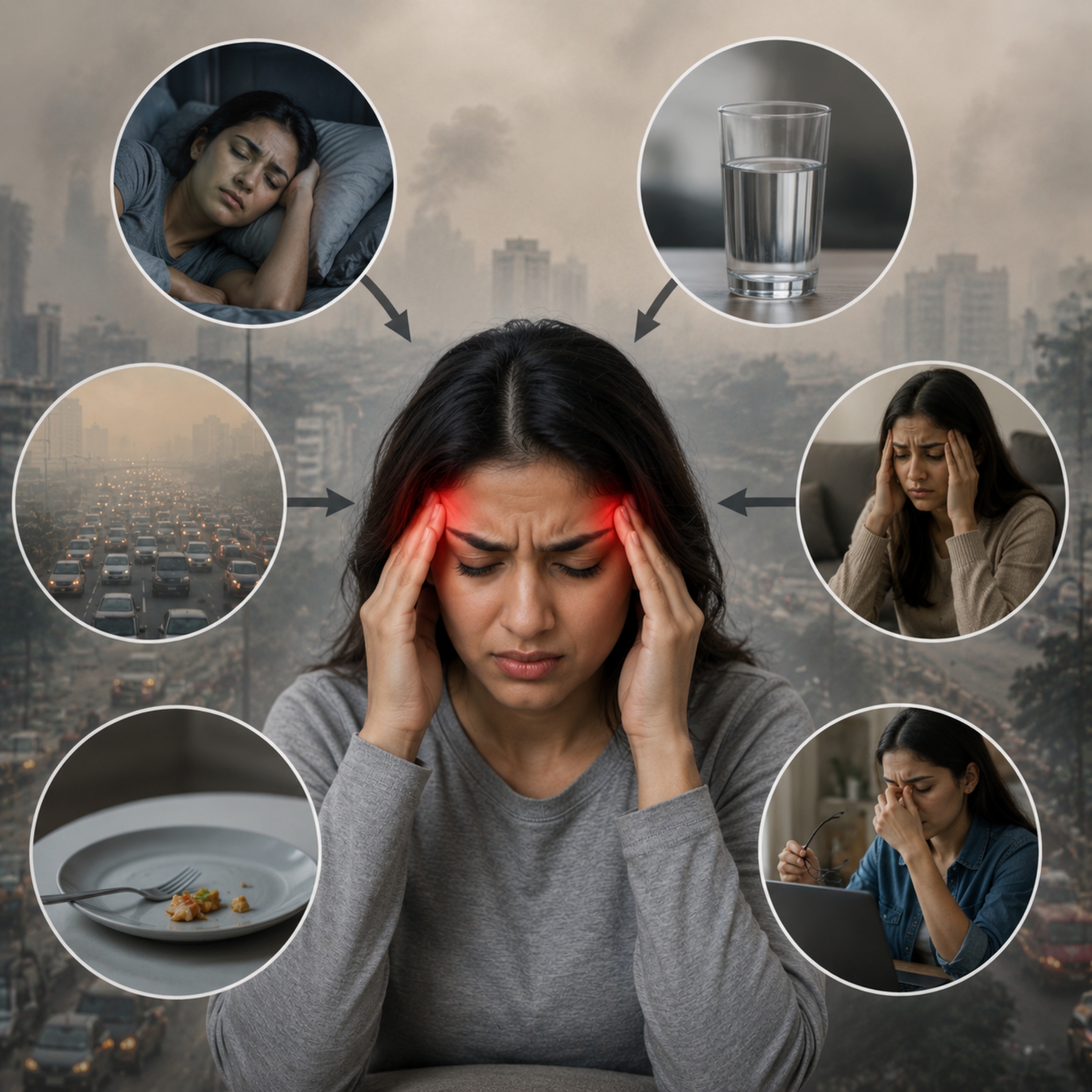
- A headache that is sudden, severe, and unlike any you have had before
- Headache with fever, stiff neck, confusion, or slurred speech
- Headache with weakness, numbness, or vision loss
- Migraine attacks that are increasing rapidly in frequency or severity month on month
- Headache that does not respond to your usual medication
How to Prevent Air Pollution Migraine: Protect Your Brain
You cannot control Delhi NCR’s air quality on your own, but you can significantly reduce your personal risk:
- Track the AQI daily using the CPCB’s live AQI portal and limit outdoor exertion when levels are poor or severe.
- Wear an N95 mask outdoors during high-pollution days, especially while commuting.
- Use a good indoor air purifier at home and in the office, particularly in the bedroom.
- Stay well hydrated — dehydration lowers your threshold for a migraine attack.
- Keep a headache diary noting the date, AQI level, and symptoms, so patterns become clear over time.
- Avoid indoor pollutants like incense, candles, and unventilated cooking smoke during high-AQI periods.
- Do not self-medicate long term — overuse of painkillers can itself cause rebound headaches.

About Dr. Vikas Kathuria
With 26+ years of experience and over 2.5 lakh patients treated, Dr. Vikas Kathuria is a senior neurosurgeon at Max Hospital, Gurgaon, and heads the Skin Aura Brain & Spine Neuro Centre. He specialises in headache, migraine, and the full spectrum of brain, spine, and nerve conditions across Gurgaon and Delhi NCR.
When Should You See a Neurosurgeon in Gurgaon?
Occasional pollution-related headaches can usually be managed with lifestyle precautions. However, if your migraines are becoming more frequent, more severe, or are starting to interfere with work and daily life, it is time for a proper neurological evaluation. Dr. Vikas Kathuria’s team assesses your headache pattern, checks for underlying triggers, and creates a personalised treatment plan — combining medication, preventive therapy, and practical lifestyle guidance suited to Delhi NCR’s air quality challenges.
Struggling with frequent migraines or pollution-triggered headaches in Gurgaon or Delhi NCR?
Frequently Asked Questions
Can air pollution really cause migraine?
Yes. Fine particulate matter in polluted air can enter the bloodstream and trigger inflammation in the brain’s blood vessels, which is a known mechanism behind migraine attacks.
Why do headaches get worse in Delhi NCR during winter?
Winter brings smog, stubble-burning smoke, and Diwali firecracker pollution together, pushing AQI to severe levels and significantly increasing migraine and headache complaints across Gurgaon and Delhi NCR.
Does wearing a mask help reduce migraine triggered by pollution?
A good quality N95 mask reduces inhalation of harmful PM2.5 particles and can help lower pollution-related headache and migraine risk, especially during commutes and outdoor activity.
How is a pollution-triggered migraine diagnosed?
Diagnosis is based on your symptom pattern, medical history, and correlation with air quality, along with a clinical neurological examination. Imaging such as an MRI may be advised if red-flag symptoms are present.
When should I consult a neurosurgeon for headaches?
You should seek expert evaluation if headaches become frequent, severe, or are accompanied by vomiting, vision changes, confusion, or weakness, or if your usual medication stops working.
Can lifestyle changes reduce pollution-related migraine?
Yes. Tracking AQI, staying hydrated, using air purifiers indoors, wearing masks outdoors, and maintaining regular sleep can meaningfully reduce the frequency and severity of pollution-triggered migraine.