


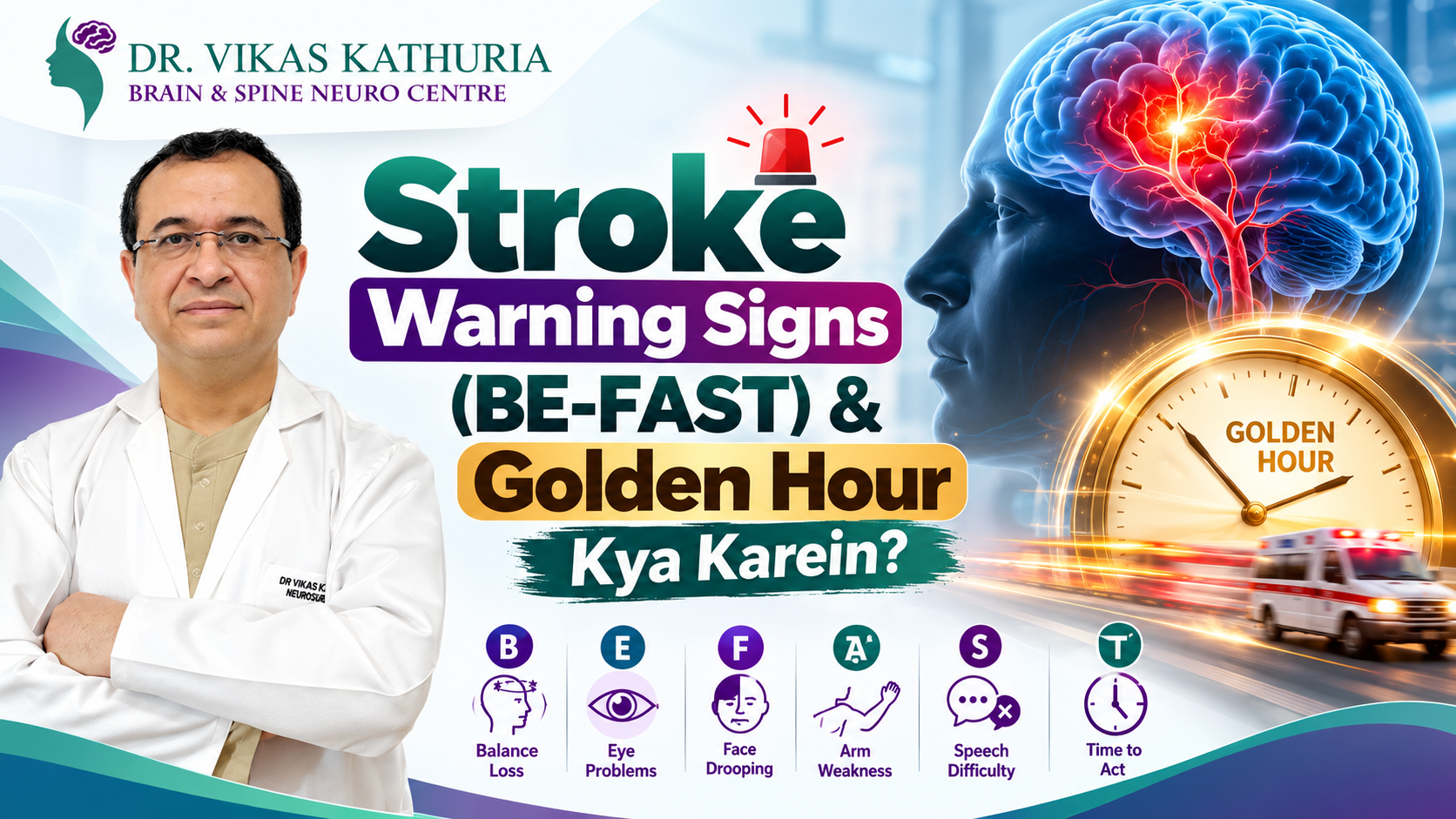
Every stroke is a race against the clock. In Gurgaon and across Delhi NCR, many families lose precious hours because they mistake a sudden facial droop, slurred speech or a weak arm for tiredness, gas, or low blood pressure. This guide explains the stroke warning signs (BE-FAST), what the golden hour really means, and exactly kya karein in the first few minutes. It also covers stroke symptoms and treatment in Gurgaon, so you know whom to call and where to go.
🚨 Suspect a stroke right now? Do not wait for symptoms to settle. Call 112 (or an ambulance on 102 / 108) immediately, note the exact time symptoms began, and head to the nearest stroke-ready hospital with CT/MRI facilities. Every minute counts.
⚡ Quick Answer in 30 Seconds
- BE-FAST = Balance, Eyes, Face, Arm, Speech, Time. One positive sign is enough to act.
- Golden hour: the earlier treatment starts, the more brain tissue can be saved. Clot-busting medicine works only within a limited window.
- Do not drive yourself, give food or water, or try home remedies. Go straight to a hospital.
- Strokes can be ischemic (blocked artery) or hemorrhagic (bleeding), and a scan decides which treatment is safe.
What Is a Stroke? Understanding the Two Types
A stroke, often called a brain attack, happens when blood supply to a part of the brain is interrupted or a blood vessel in the brain bursts. Brain cells begin to die within minutes because they are starved of oxygen. According to the World Health Organization, stroke remains one of the leading causes of death and long-term disability worldwide. Roughly 1.9 million brain cells can be lost every minute in a large untreated stroke, which is exactly why speed matters so much.
| Feature | Ischemic Stroke | Hemorrhagic Stroke |
|---|---|---|
| Cause | Clot or narrowing blocks a brain artery | A weak vessel or aneurysm ruptures and bleeds |
| How common | Most strokes (around 8 in 10) | Less common but often more severe |
| Typical trigger | High BP, diabetes, AFib, cholesterol, smoking | Uncontrolled BP, aneurysm, AVM, head injury |
| First-line care | Clot-dissolving drugs, thrombectomy, stenting | BP control, medicines, surgery or coiling/clipping |
Because the two types need opposite treatments, nobody should give blood thinners or aspirin at home before a scan. If you want a deeper look at bleeding strokes, read our guide to brain hemorrhage treatment in Gurgaon.
Stroke Warning Signs: The BE-FAST Test Explained
The older FAST test missed some strokes, especially those affecting balance and vision. The updated BE-FAST checklist, recommended by the American Stroke Association, adds Balance and Eyes. It takes less than a minute and needs no medical training.
Balance
Sudden dizziness, loss of coordination, or trouble walking in a straight line.
Eyes
Sudden blurred, double or lost vision in one or both eyes.
Face
Ask the person to smile. Does one side droop or look uneven?
Arm
Ask them to raise both arms. Does one arm drift down or feel weak or numb?
Speech
Slurred, strange or confused speech, or difficulty understanding you.
Time
Note the time symptoms started and call 112 at once. Do not wait.
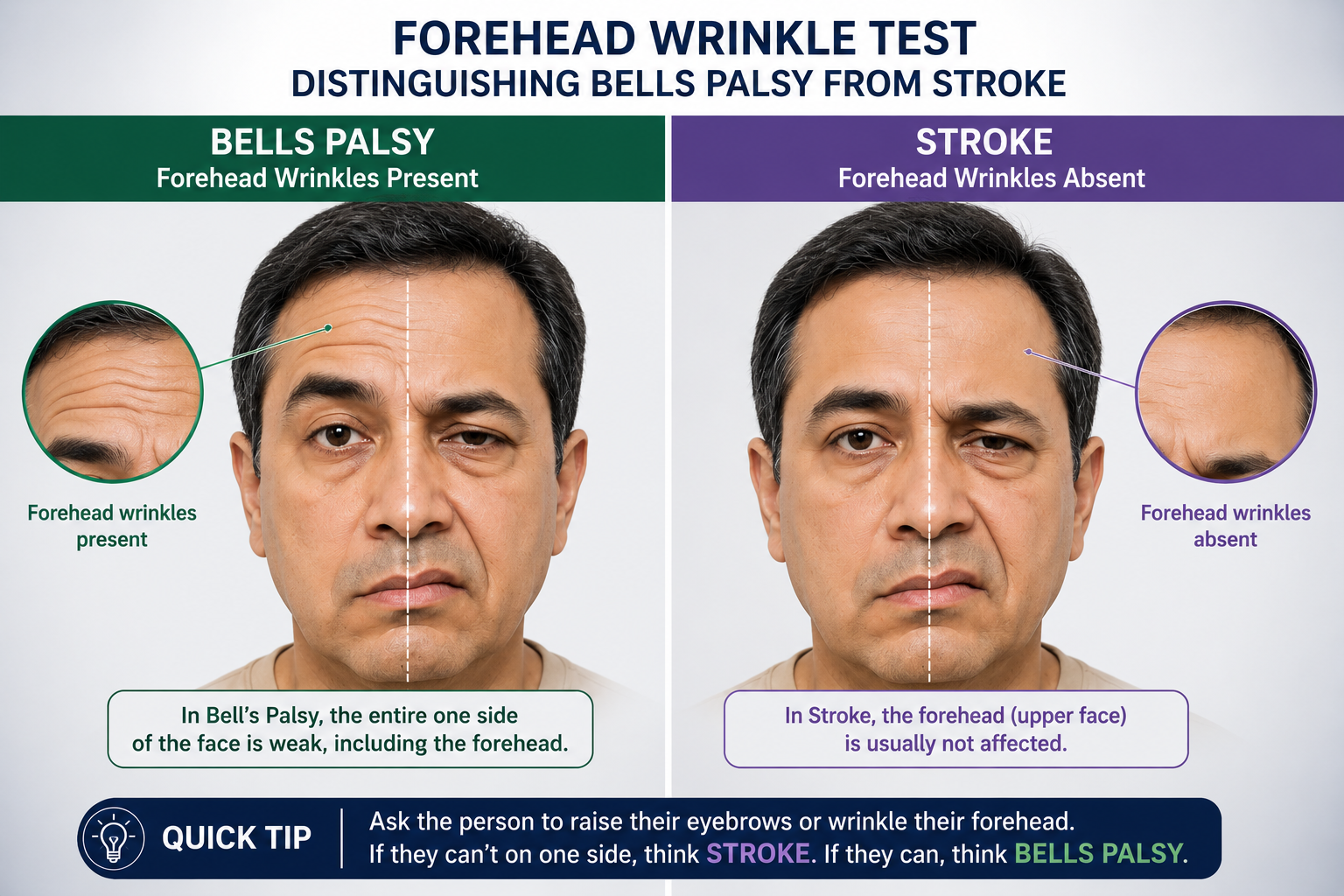
Facial droop is also seen in Bell’s palsy, which is not a stroke. A quick forehead-wrinkle test can help, but only a doctor can confirm the cause. Learn the difference in our article on Bell’s palsy vs stroke, and never assume a droop is harmless.
Other Stroke Symptoms You Should Never Ignore
Not every stroke follows the textbook pattern. Watch for these additional signs of stroke:
- Sudden, severe headache described as “the worst of my life”, often with vomiting (common in bleeding strokes)
- Sudden confusion, trouble understanding people, or unexplained behaviour change
- Numbness or tingling on one side of the face, arm or leg
- Difficulty swallowing or sudden drooling
- Seizure at the onset of symptoms
Mini-Stroke (TIA): The Warning Shot
A transient ischemic attack, or mini-stroke, causes the same symptoms but disappears within minutes to hours. Many people feel relieved and skip the doctor. That is a dangerous mistake, because a TIA often signals that a full stroke is coming in the following days. Anyone with even a brief episode should be evaluated urgently by a neurosurgeon or neurologist.
The Golden Hour: Why “Time Is Brain”
The golden hour in stroke refers to the earliest period after symptoms begin, when treatment can rescue the most brain tissue. It is not literally 60 minutes for every patient, but the principle is simple: faster arrival means more treatment options and better recovery. Doctors always count from the “last known well” time, meaning when you were last completely normal, not when you were found.
| Time Since Symptoms | What May Be Possible |
|---|---|
| Within 4.5 hours | Intravenous clot-dissolving medicine (thrombolysis) for eligible ischemic stroke patients |
| Within about 6 hours | Mechanical thrombectomy (clot retrieval) for large-vessel blockages |
| Up to 24 hours (selected cases) | Thrombectomy may still help when advanced brain imaging shows salvageable tissue |
| Bleeding stroke, any time | Emergency BP control, scans, and surgery or aneurysm treatment when needed |
These windows are guideline-based and individual eligibility depends on scan findings and medical history. The takeaway for families is straightforward: reach a stroke-ready hospital as early as possible and tell the team the exact onset time.
Stroke Emergency: Kya Karein (and Kya Nahi Karein)
In the first minutes, calm and correct action decides the outcome. Here is a simple do and don’t list for families in Delhi NCR.
✅ Do This
- Call 112 or an ambulance immediately
- Write down the time symptoms began
- Keep the person lying down with head slightly raised
- Loosen tight clothing and turn them on their side if drowsy
- Carry old reports and a list of current medicines
- Choose a hospital with CT/MRI and 24×7 neuro care
❌ Avoid This
- Do not give water, food or tablets (swallowing may be unsafe)
- Do not give aspirin without a scan
- Do not wait to “see if it passes”
- Do not pierce fingers, apply oil or try home remedies
- Do not drive the patient yourself through traffic
- Do not stop at a clinic that lacks scan facilities
Stroke Symptoms and Treatment in Gurgaon: How Diagnosis Works
Once the patient reaches hospital, the team moves quickly. A non-contrast CT scan is usually the first test because it separates a clot from a bleed within minutes. Depending on the picture, doctors may add MRI, CT angiography, carotid Doppler, ECG and blood tests. Our detailed service page on brain stroke treatment in Gurgaon explains each step.
Treatment for Ischemic Stroke
Care focuses on restoring blood flow: thrombolysis in the early window, mechanical thrombectomy for large clots, antiplatelet or anticoagulant therapy afterwards, and carotid stenting or endarterectomy when a neck artery is badly narrowed. Strict control of blood pressure, sugar and cholesterol follows.
Treatment for Hemorrhagic Stroke
Here the aim is to stop bleeding and reduce pressure on the brain. This may involve medicines, careful BP lowering, surgical removal of the clot, or treating the source, such as an aneurysm through clipping or coiling. A stroke after a fall or accident also needs a head injury assessment. This is where an experienced neurosurgeon makes the difference.
Who Is at Risk in Gurgaon and Delhi NCR?
Stroke is no longer only a disease of the elderly. Neurosurgeons across the region now see strokes in people in their 30s and 40s. Common drivers include:
- High blood pressure, the single biggest controllable risk factor, often undiagnosed in busy professionals
- Diabetes, high cholesterol and obesity linked to sedentary desk jobs and irregular meals
- Smoking, tobacco and heavy drinking
- Heart rhythm problems such as atrial fibrillation
- Chronic stress and poor sleep, including untreated snoring or sleep apnea
- Winter cold and polluted air, when blood pressure tends to rise and arteries tighten
🛡️ Simple Prevention Checklist
- Check blood pressure at least once a month after age 30
- Walk briskly 30 minutes, five days a week
- Cut salt, fried food and processed snacks
- Quit tobacco and limit alcohol
- Take prescribed BP, sugar and cholesterol medicines without gaps
- Get a yearly health check, including heart rhythm and carotid screening if advised
Recovery and Rehabilitation After a Stroke
Recovery begins in the hospital and continues for months. Physiotherapy rebuilds strength and balance, occupational therapy restores daily skills, and speech therapy helps with speaking and swallowing. Family support and emotional care matter just as much. Our guides on stroke rehabilitation and paralysis after stroke outline realistic timelines. Early rehab, started once the patient is stable, gives the best chance of regaining independence.
Tips for Caregivers
Family members are the backbone of stroke recovery. Keep a medicine chart, attend every follow-up, watch for low mood or depression (common after stroke), prevent falls at home, and celebrate small gains. Most importantly, never stop blood pressure medicines on your own. Whether you need stroke symptoms and treatment guidance in Gurgaon or a second opinion from elsewhere in Delhi NCR, our team can help you plan the next step.

Noticed a warning sign? Do not wait.
Consult Dr. Vikas Kathuria for stroke evaluation and neurosurgical care in Gurgaon and Delhi NCR.
Why Choose Dr. Vikas Kathuria for Stroke Care in Gurgaon?
Dr. Vikas Kathuria is a senior consultant neurosurgeon at Max Hospital, Gurgaon, with more than 26 years of experience in brain, spine and nerve disorders. His approach is patient-first and evidence-based: accurate diagnosis, a clear explanation for the family, and surgery only when it is genuinely needed. He manages bleeding strokes, aneurysms, head injuries and related brain emergencies, and guides long-term recovery and prevention for survivors. See more on our blog for patient-friendly neurological guides.
📍 Consult in Gurgaon & Delhi NCR
Clinic: Skin Aura Brain & Spine Neuro Centre, H.N. 7311, Behind DLF Super Mart 2, DLF Phase IV, near Huda City Centre Metro, Gurugram.
Hospital: Max Hospital, Sushant Lok 1, Gurugram, plus consulting hours at select hospitals across Gurgaon and Delhi NCR (see all locations).
Timings: Mon to Sat 10:30 AM to 12:30 PM and 6:00 PM to 7:30 PM; Sunday 10:00 AM to 2:00 PM.
Consultation fee: ₹2,500. Online video consultation is also available for follow-up and second opinions.
Serving: Gurgaon, Delhi, Noida, Faridabad, Ghaziabad and nearby Delhi NCR areas.
Frequently Asked Questions About Stroke
What are the first warning signs of a stroke?
Sudden loss of balance, vision trouble, facial droop, arm weakness and slurred speech (BE-FAST). A sudden severe headache or confusion can also signal a stroke.
What is the golden hour in stroke treatment?
It is the earliest period after symptom onset when treatment saves the most brain tissue. Clot-dissolving medicine is generally given within 4.5 hours, so arriving early widens your options.
What should I do if someone has a stroke at home?
Call 112 or an ambulance, note the time symptoms started, keep the person lying down, give nothing by mouth, and go to a stroke-ready hospital with CT/MRI.
Can a young person have a stroke?
Yes. Uncontrolled blood pressure, smoking, stress, sleep problems, heart rhythm issues and clotting disorders are increasingly causing strokes in people under 45.
Is a mini-stroke (TIA) dangerous?
Yes. Symptoms vanish quickly, but a TIA is a warning that a major stroke may follow. Get evaluated the same day.
Can stroke patients recover fully?
Many improve significantly, especially with early treatment and consistent rehabilitation. The extent of recovery depends on stroke type, severity and how quickly care began.
Who treats stroke in Gurgaon, a neurologist or neurosurgeon?
Both play roles. Neurologists manage clot-related strokes medically, while a neurosurgeon is vital for bleeding strokes, aneurysms and surgical decisions. Dr. Vikas Kathuria offers neurosurgical care in Gurgaon.
How can I prevent a stroke?
Control blood pressure, sugar and cholesterol, stay active, avoid tobacco, eat less salt, sleep well and go for regular health check-ups.
Need an expert opinion on stroke symptoms and treatment in Gurgaon?
Medical disclaimer: This article is for general awareness and does not replace professional medical advice. In a suspected stroke, call emergency services immediately. Further reading: NINDS stroke information.