


Brain • Trending Topic • Delhi NCR
Chronic Headache Treatment in Delhi NCR: Migraine or Something More?
Not every headache is harmless. Know the red-flag symptoms that need a neurosurgeon’s evaluation in Delhi NCR.

Almost everyone gets a headache now and then. Traffic, screen time, poor sleep, and the everyday stress of life in Gurgaon and Delhi NCR are more than enough to bring one on. But when a headache keeps coming back, changes shape, or starts behaving differently than before, it stops being an ordinary nuisance and the right chronic headache treatment becomes something worth understanding properly.
The challenge is that chronic headache and migraine often get used as if they mean the same thing, when they don’t. Understanding the difference — and knowing the red flags that separate “manageable” from “needs a specialist” — can make a real difference in how early a serious condition is caught, and how effective your chronic headache treatment turns out to be.
Most people manage their headaches quietly, popping a tablet and getting on with the day, without ever pausing to ask whether the pattern itself has changed. That’s usually fine — the overwhelming majority of headaches, even frequent ones, are benign. But a small percentage carry warning signs that are easy to miss if you don’t know what to look for. This guide breaks down the practical differences between chronic headache and migraine, lists the red-flag symptoms that genuinely warrant a specialist’s opinion, and explains what proper chronic headache treatment in Delhi NCR looks like.
Chronic Headache vs Migraine: What’s the Real Difference?
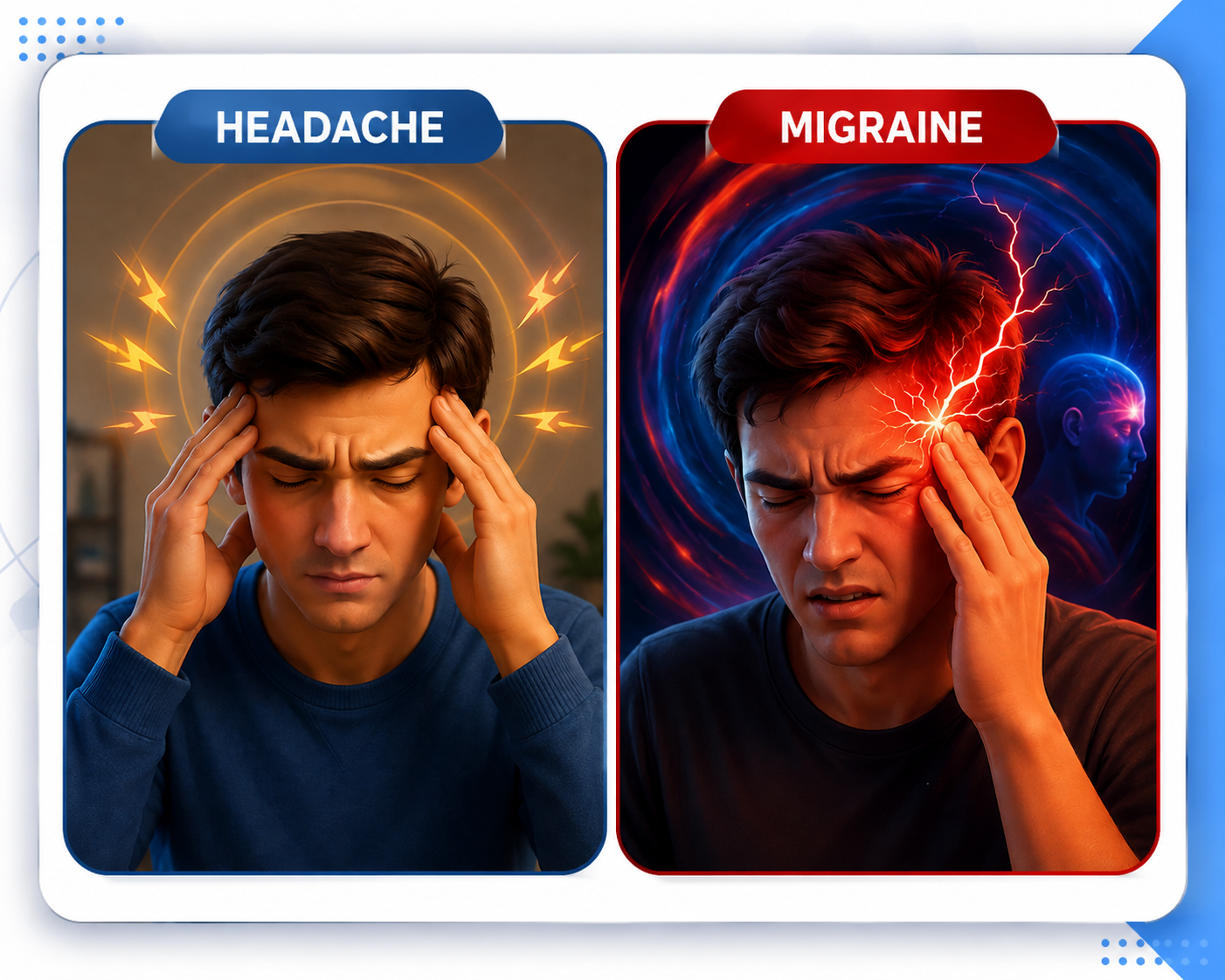
Both conditions cause recurring pain, but their character, triggers, and accompanying symptoms are distinct — and getting this distinction right is the first step to the correct chronic headache treatment. A quick side-by-side view helps:
| Feature | Chronic Headache (Tension-Type) | Migraine |
|---|---|---|
| Pain location | Both sides, band-like pressure | Usually one side, throbbing |
| Frequency | 15+ days a month for 3+ months | Episodic, but can turn chronic |
| Nausea/vomiting | Rare | Common |
| Light/sound sensitivity | Mild or absent | Marked |
| Aura (visual/sensory warning) | Absent | Present in some patients |
| Effect on daily activity | Dull, tolerable in most cases | Often disabling during an attack |
If your headaches match the migraine pattern more closely, our detailed guide on migraine treatment explains causes, triggers, and management options in depth.
Common Types of Headaches That Need Chronic Headache Treatment
- Chronic tension-type headache — a constant, dull ache often linked to stress, poor posture, or eye strain.
- Chronic migraine — 15 or more headache days a month, at least 8 of which have migrainous features.
- Cluster headache — intense, one-sided pain around the eye, occurring in cyclical “clusters.”
- Medication-overuse headache — develops when painkillers are used too often, ironically making headaches worse over time.
- Cervicogenic headache — pain that originates from the neck and radiates upward, frequently linked to desk jobs and long commutes across Delhi NCR.
Neck-related headaches are increasingly common among IT and corporate professionals in Gurgaon who spend long hours at a screen. If neck stiffness accompanies your headache, it’s worth reviewing our page on neck pain treatment as well.

Red Flag Symptoms: When a Headache Is No Longer “Just a Headache”
Doctors use a simple mental checklist — often remembered by the acronym SNOOP — to flag headaches that may point to something more serious than tension or migraine. If any of the following apply to you, it is time for a proper neurological evaluation rather than another round of over-the-counter painkillers:
- Sudden, severe onset — a “thunderclap” headache that reaches peak intensity within seconds to minutes.
- New headache after age 50 — a fresh headache pattern appearing for the first time later in life.
- Neurological symptoms — weakness, numbness, slurred speech, double vision, or difficulty balancing.
- Onset with exertion — headaches triggered by coughing, straining, or physical activity.
- Pattern change — a known migraine or tension headache that suddenly becomes more frequent, more severe, or feels different.
- Systemic symptoms — fever, unexplained weight loss, or a headache accompanied by neck stiffness.
- Seizures or loss of consciousness alongside the headache.
- Headache that wakes you from sleep or is worse first thing in the morning, especially with vomiting.
These features can, in some cases, be linked to conditions such as a brain tumor, a brain bleed, or even early warning signs of a brain stroke. This does not mean every bad headache signals something dangerous — the vast majority don’t — but these red flags are exactly why self-diagnosis at home can be risky, and why timely chronic headache treatment matters.
Why Chronic Headaches Are Rising in Delhi NCR
Several region-specific factors make Delhi NCR residents particularly prone to frequent headaches, and are pushing more people to look for proper chronic headache treatment:
- Air quality — seasonal smog and high pollution levels are a documented trigger for both tension headaches and migraines.
- Long commute hours — traffic-heavy travel across Gurgaon, Noida, and Delhi adds physical and mental strain.
- Screen-heavy work culture — extended hours on laptops and phones contribute to eye strain and cervicogenic headaches.
- Irregular sleep and meal patterns — common in shift-based and high-pressure corporate jobs.
- Weather swings — sudden shifts in humidity and temperature between seasons are a known migraine trigger.
None of these factors alone causes a headache disorder, but together they lower the threshold at which the brain reacts to stress, light, and sensory overload — which is exactly why clinics across Gurgaon and Delhi NCR see a noticeable rise in headache-related consultations during peak pollution months and season changes.
Chronic Headache: Myths vs Facts
| Myth | Fact |
|---|---|
| “A headache that comes back every day is just stress.” | Daily headaches can be stress-related, but frequency alone doesn’t rule out medication overuse, cervicogenic causes, or — rarely — a structural problem. |
| “Migraine only means one-sided pain.” | Roughly a third of migraine sufferers experience pain on both sides, especially as migraine becomes chronic. |
| “Painkillers are always safe if the headache keeps returning.” | Frequent use, more than 10-15 days a month, can itself trigger medication-overuse headache. |
| “An MRI is needed for every headache to be safe.” | Routine imaging without red flags rarely changes management and isn’t usually recommended. |
| “Headaches in young, healthy people are never serious.” | Rare, but structural causes can occur at any age — red-flag features matter more than age. |
Daily Habits That Support Your Chronic Headache Treatment
For most patients, small and consistent daily changes make a measurable difference alongside medical treatment:
- Keep a headache diary — note timing, food, sleep, and stress to identify personal triggers.
- Protect your sleep schedule — both too little and irregular sleep are well-known triggers.
- Stay hydrated — dehydration, especially in Delhi’s hot summers, is an underrated trigger.
- Take screen breaks — the 20-20-20 rule reduces eye strain and related headaches.
- Mind your posture — a supportive chair and correct monitor height reduce neck strain.
- Limit painkiller self-medication — more than 2-3 times a week warrants a proper evaluation.
- Manage stress proactively — activity, breathing exercises, or short walks lower frequency over time.
How Chronic Headaches and Migraines Are Diagnosed
Diagnosis usually starts with a detailed history — how often the headache occurs, what it feels like, what triggers it, and whether any warning symptoms accompany it. In most patients, this clinical picture alone is enough to identify a tension-type headache or migraine.
Imaging such as an MRI or CT scan is not needed for every patient. It becomes important only when red-flag symptoms are present, when the pattern is unclear, or when a structural cause needs to be ruled out.

Chronic Headache Treatment Options in Delhi NCR
When it comes to chronic headache treatment in Delhi NCR, the approach is almost always conservative first, with intervention reserved for select cases:
- Lifestyle and trigger management — sleep, hydration, and identifying personal triggers.
- Medication — acute relief for episodes plus preventive medication for frequent attacks.
- Physiotherapy and posture correction — useful for cervicogenic and tension-type headaches.
- Withdrawal of overused painkillers — under medical supervision.
- Advanced interventional options — for select cases not responding to standard treatment.
For a deeper look at causes, triggers, and step-by-step management, see our dedicated page on headache treatment. Patients dealing specifically with brain-related warning signs can also refer to our earlier article, Brain Tumor Symptoms: 10 Early Warning Signs You Shouldn’t Ignore.
When Should You See a Neurosurgeon in Delhi NCR?
Most headaches are managed well by lifestyle changes and standard medication. A neurosurgical evaluation becomes relevant when:
- The headache is the worst you’ve ever experienced.
- It started suddenly and peaked within minutes.
- It comes with weakness, numbness, vision changes, or difficulty speaking.
- An existing headache disorder has changed pattern or stopped responding to treatment.
- There is a history of head injury alongside persistent headache.
About Dr. Vikas Kathuria
Dr. Vikas Kathuria is a senior consultant neurosurgeon at Max Hospital, Gurgaon, with over 26 years of clinical experience and more than 2.5 lakh patients treated for brain and spine conditions, including chronic headache and migraine. He takes a careful, evaluation-first approach — recommending imaging or intervention only when clinically warranted. Read more on the homepage.
Frequently Asked Questions
1. What is the main difference between a chronic headache and a migraine?
A chronic headache usually causes dull, pressing pain on both sides of the head and occurs on 15 or more days a month, while a migraine is typically a one-sided, throbbing headache with nausea, light sensitivity, and sometimes visual aura.
2. When should a headache in Delhi NCR be checked by a neurosurgeon?
When it is the worst headache of your life, starts suddenly like a thunderclap, worsens after age 50, changes pattern in someone with a known headache history, or comes with weakness, vision loss, seizures, fever, or confusion.
3. Can pollution and weather in Delhi NCR trigger chronic headaches?
Yes. Rising air pollution, humidity changes, and seasonal smog are recognised environmental triggers that can increase the frequency and intensity of tension headaches and migraines.
4. Is a scan always needed to diagnose a chronic headache?
No. Most chronic headaches are diagnosed clinically. An MRI or CT scan is advised only when red-flag symptoms are present or the diagnosis is unclear.
5. Can chronic headaches be treated without surgery?
Yes, most cases are managed with medication, trigger management, lifestyle changes, and preventive therapy. Surgery is considered only in select cases with an identifiable structural cause.
6. How is medication-overuse headache different from a regular chronic headache?
It develops when painkillers are used too frequently, making the brain more sensitive to pain. It often improves once the overused medication is gradually withdrawn under medical guidance.
Book Your Chronic Headache Treatment Consultation
If your headaches have changed pattern, become more frequent, or come with any of the red-flag symptoms above, don’t wait it out.
DLF Phase IV, Gurugram | +91-92151 51260
Disclaimer: This article is for general informational purposes only and is not a substitute for professional medical advice, diagnosis, or treatment. Always consult a qualified neurosurgeon or physician for evaluation of your specific symptoms.